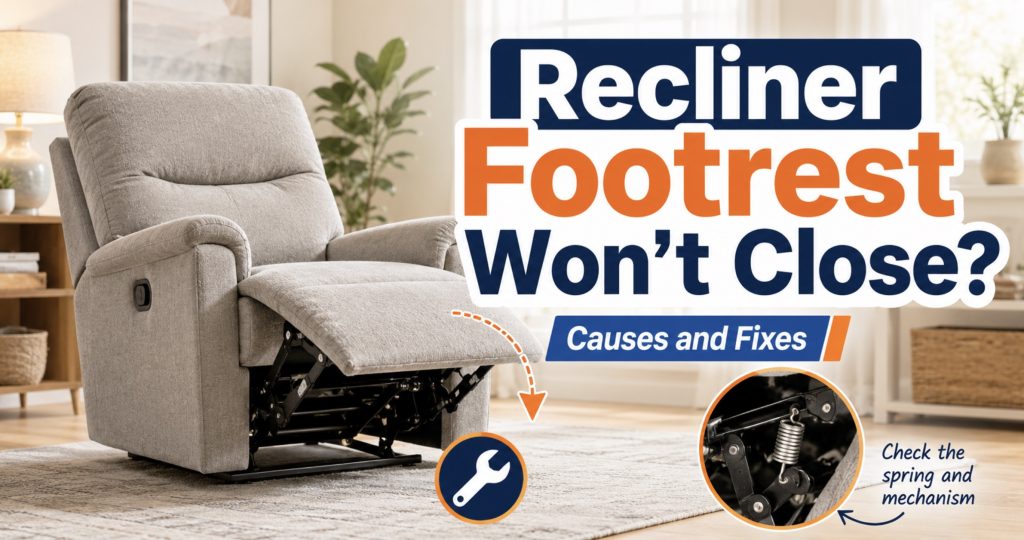
A recliner footrest that refuses to close is annoying, awkward, and sometimes unsafe—but it usually does not mean the entire chair is ruined. The cause may be something simple, such as trapped debris or a dry pivot, or a failed spring, cable, actuator, latch, or bent mechanism that needs closer attention.
- Quick Checks Before Taking Anything Apart
- Manual vs Power Recliner Diagnosis
- Common Reasons a Recliner Footrest Will Not Close
- Manual Recliner Footrest Fixes
- Power Recliner Footrest Fixes
- Footrest Closes Unevenly or Stops Halfway
- How to Check the Springs
- How to Inspect the Recliner Mechanism
- Where and How to Lubricate
- How to Prevent the Problem
- Frequently Asked Questions
Quick Checks Before Taking Anything Apart
Before flipping the chair over or ordering replacement parts, try these simple checks:
- Remove anything underneath the footrest: Toys, cords, slippers, blankets, and pet items can block the linkage.
- Check for trapped fabric: Upholstery lining can fold into the scissor mechanism and prevent full closure.
- Move the chair away from the wall: The back or frame may be contacting furniture before the mechanism completes its cycle.
- Apply steady pressure: On a manual recliner, use your legs to press the footrest inward evenly. Do not kick or slam it.
- Listen carefully: A click, scrape, hum, or grinding sound can point toward a latch, obstruction, actuator, or bent linkage.
- Compare both sides: If one side sits higher than the other, the problem is probably mechanical rather than electrical.
- Check the power connection: On an electric recliner, confirm the transformer and low-voltage plugs are firmly connected.
If the chair is fully stuck in the open position, the related guide on recliners stuck open and their common repairs covers additional diagnostic steps.
First Determine Whether the Recliner Is Manual or Powered
The correct troubleshooting path depends on how the footrest operates.
Manual Recliner
A manual recliner normally uses one of these release systems:
- External pull handle
- Inside-arm lever
- Release cable connected to a latch
- Push-back reclining mechanism
- Mechanical ratchet or locking bar
Manual recliners that will not close usually have a jammed latch, weak return spring, bent mechanism, loose hardware, fabric obstruction, or damaged handle-and-cable system.
Power Recliner
A power recliner may use:
- Side-mounted control buttons
- Wired hand control
- Wireless remote
- Linear actuator motor
- Control box or junction box
- Low-voltage transformer
- Battery backup system
Power recliners that open but will not close may have a failed close button, damaged remote cable, loose motor connector, weak transformer, faulty control box, stalled actuator, or jammed mechanism.
Common Reasons a Recliner Footrest Will Not Close
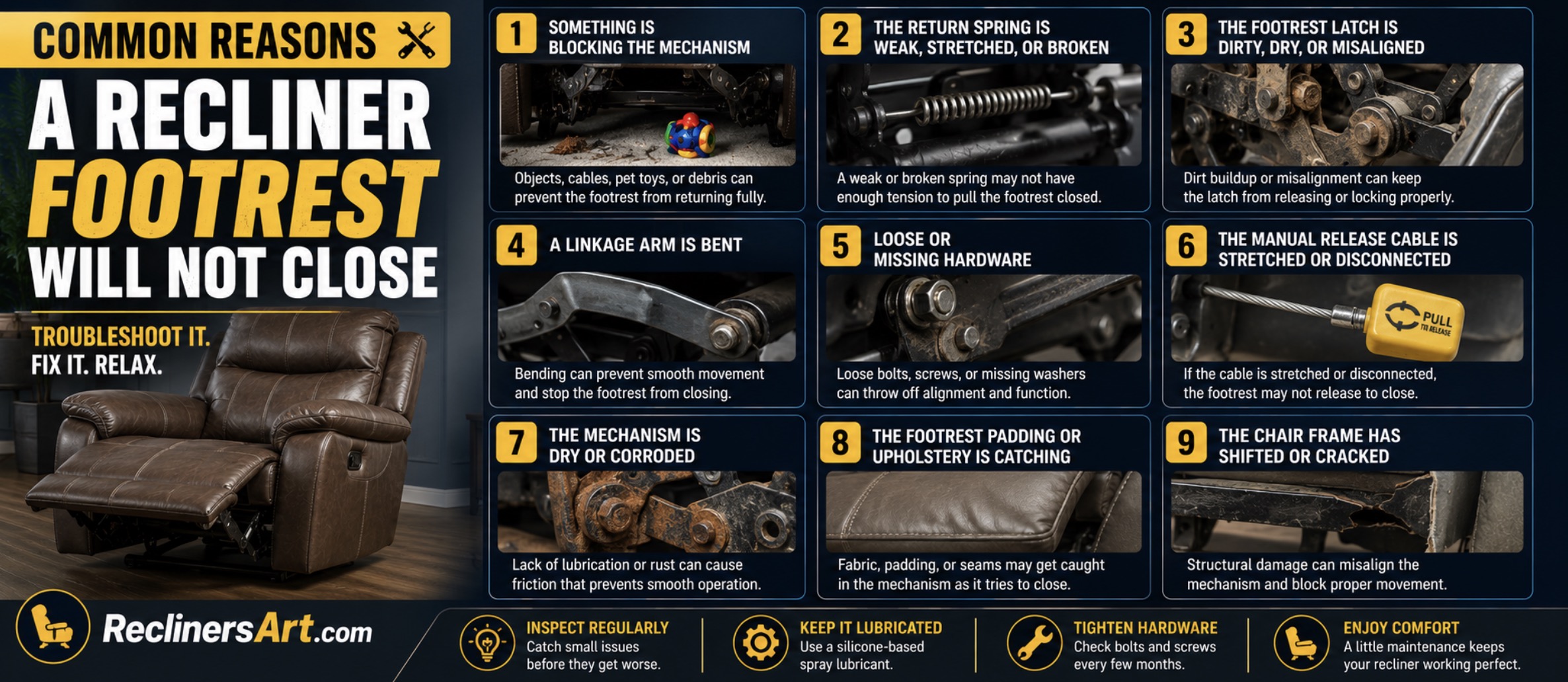
1. Something Is Blocking the Mechanism
The most common and easiest-to-fix cause is an obstruction underneath the chair. Recliner mechanisms contain moving scissor arms, crossbars, brackets, and pivots with very little clearance. Even a small object can stop the footrest before it reaches the latch.
Check for:
- Power cords crossing the linkage
- Remote cables caught between metal arms
- Loose upholstery fabric
- Blankets or clothing
- Pet toys
- Coins and other small objects
- Bent staples or trim pieces
- Zip ties positioned too tightly
Unplug a power recliner before reaching underneath it. Remove the obstruction, inspect for damage, and slowly test the footrest again.
2. The Return Spring Is Weak, Stretched, or Broken
Return springs help pull the footrest mechanism back toward its closed position. When one weakens or breaks, the footrest may stop several inches short, feel unusually heavy, or close only when pushed firmly.
Common signs include:
- The footrest closes slowly
- One side retracts more than the other
- The footrest hangs loosely when partly closed
- A loose spring is visible underneath the chair
- A metallic snap occurred before the problem started
Do not replace a spring based only on appearance. Measure the spring body, hook-to-hook length, wire thickness, and hook shape. The guide explaining the difference between recliner tension and return springs can help you identify the correct type.
A matching set of recliner footrest return springs may restore normal closing force when the original spring is stretched or broken.
3. The Footrest Latch Is Dirty, Dry, or Misaligned
Many manual recliners use a latch or locking pawl to hold the footrest closed. Dust, corrosion, dry pivots, or a slightly bent bracket can keep the latch from engaging.
Symptoms include:
- The footrest reaches the chair but pops back out
- You hear repeated clicking without a secure lock
- The footrest stays closed only while pressure is applied
- The latch appears to miss the locking bar
Clean the latch area and inspect it while a helper gently moves the footrest. Tighten loose mounting bolts and lubricate only the pivot points—not the gripping or locking surfaces.
4. A Linkage Arm Is Bent
Recliner mechanisms are designed to move symmetrically. A bent scissor arm, crossbar, or mounting bracket can prevent the footrest from folding into the correct position.
Look for:
- One side moving before the other
- Metal arms that no longer match from side to side
- Fresh scrape marks
- Twisted brackets
- A footrest that appears crooked when extended
- Rivets pulling sideways through their holes
Slightly loose hardware can sometimes be tightened, but severely bent structural arms normally require replacement. Trying to hammer a mechanism straight while it is attached can make the alignment worse.
5. Loose or Missing Hardware
Bolts, nuts, retaining clips, and pivot pins can loosen after years of use. Once the mechanism shifts out of alignment, the footrest may bind or stop short.
Inspect for:
- Loose mounting bolts
- Missing washers
- Broken retaining clips
- Partially backed-out pivot pins
- Elongated or damaged bolt holes
- Metal shavings around joints
A basic recliner repair hardware kit may help with common clips and fasteners, but match the original diameter and grade whenever the hardware carries structural load.
6. The Manual Release Cable Is Stretched or Disconnected
A damaged release cable usually causes opening problems, but on some mechanisms it can also leave the release arm partially engaged and interfere with closure.
Check whether:
- The handle feels unusually loose
- The cable sheath has slipped out of its bracket
- The inner cable does not return freely
- The release arm remains pulled after the handle is released
- The cable is pinched or kinked underneath the chair
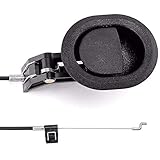
A compatible recliner release cable and handle can replace a stretched, frayed, or broken assembly.
7. The Mechanism Is Dry or Corroded
Dry metal pivots create friction. The footrest may require excessive force, stop halfway, or make squeaking and scraping sounds.
Common problem areas include:
- Main scissor-arm pivots
- Footrest hinge points
- Crossbar pivots
- Latch pivots
- Spring attachment points
Use a small amount of silicone spray lubricant for recliner mechanisms or dry PTFE lubricant. Avoid soaking the mechanism or spraying upholstery, wiring, motors, belts, or locking faces.
8. The Footrest Padding or Upholstery Is Catching
The mechanism may work normally while excess foam, shifted padding, or loose upholstery prevents the footrest from fitting into the chair.
Inspect:
- The lower front edge of the seat
- The sides of the footrest pad
- Dust-cover fabric underneath
- Loose staples or upholstery clips
- Foam bulging around the hinge area
Secure loose fabric away from the moving parts with suitable upholstery staples or clips. Do not compress or cut padding until you confirm it is actually causing interference.
9. The Chair Frame Has Shifted or Cracked
A cracked wooden rail or loose mechanism mount can change the geometry of the reclining system. This may cause repeated binding even after springs and joints have been checked.
Warning signs include:
- Cracking or popping sounds
- Mechanism bolts pulling away from the frame
- A visibly split wooden rail
- The seat leaning to one side
- The entire mechanism moving independently of the frame
Stop using the chair if the mechanism is separating from the frame. Structural repairs may require replacement hardwood, reinforcement plates, clamps, screws, and wood glue—or professional furniture repair.
How to Fix a Manual Recliner Footrest That Will Not Close
Step 1: Clear the Area
Move the chair away from walls and furniture. Remove nearby objects and make sure children and pets stay clear of the work area.
Step 2: Close the Footrest as Far as It Will Go
Apply even pressure with both legs. Note whether it stops abruptly, gradually becomes harder, twists, or reaches the frame but fails to latch.
Step 3: Tip the Recliner Safely
Ask another person to help. Place the chair on a thick blanket or padded mat to protect the upholstery and floor. Position it so the underside is visible and stable.
A rechargeable magnetic work light is useful for illuminating the mechanism without needing to hold a flashlight.
Step 4: Compare Both Sides of the Mechanism
Look at the left and right scissor arms. They should generally mirror one another. Check whether one side is:
- Further extended
- Missing a spring
- Bent inward or outward
- Missing a clip or pin
- Rubbing the frame
Step 5: Check the Springs
Look for broken coils, stretched hooks, detached ends, or mismatched spring positions. Do not grab a spring with your fingers while it is under tension.
Use a suitable recliner spring puller tool if a spring must be removed or installed.
Step 6: Inspect the Latch
Watch the latch while a helper moves the footrest slowly. Confirm that the locking bar approaches the latch squarely and that the latch rotates freely.
Clean away debris and add a tiny amount of lubricant to the latch pivot. Do not lubricate the surface that must hold the locking bar.
Step 7: Tighten Loose Fasteners
Use the correct socket, wrench, or hex key. Tighten loose mounting bolts without overtightening them. Pivot bolts usually need enough freedom for the joint to move.
Step 8: Lubricate Dry Pivots
Apply one short spray or a drop of lubricant at each dry metal-on-metal pivot. Cycle the mechanism several times, wipe away excess lubricant, and keep it off upholstery.
Step 9: Test the Chair Upright
Return the recliner to its normal position before fully testing it. Open and close the footrest slowly several times while listening for rubbing, clicking, or uneven movement.
How to Fix a Power Recliner Footrest That Will Not Close
Step 1: Test Every Powered Function
Check the footrest, backrest, headrest, lumbar support, heat, massage, and Home button if equipped.
- Nothing works: Suspect the outlet, transformer, power cable, control box, or main connection.
- Footrest opens but will not close: Suspect the close button, remote, switch, control-box output, motor wiring, or actuator.
- Other functions work: Focus on the footrest motor and its control path.
- The motor runs but movement stops: Look for binding, a bent mechanism, or an actuator connection problem.
Step 2: Reset the Recliner
- Unplug the power supply from the wall.
- Disconnect any battery backup.
- Wait 60–90 seconds.
- Reconnect the handset and motor plugs firmly.
- Reconnect the transformer.
- Restore wall power.
- Press and hold the close or Home button as directed in the chair manual.
Some control systems need a full initialization cycle after power loss or connector disconnection.
Step 3: Check the Transformer
Many power recliners use a 29V DC power supply, although voltage and amperage vary. Read the original transformer label before ordering anything.
Check for:
- An illuminated power indicator
- A loose AC cord
- A loose two-pin low-voltage connector
- Burn marks or melted plastic
- Buzzing, overheating, or a burned smell
A compatible 29V two-pin recliner power supply may solve the problem if the original transformer cannot provide enough current under load.
Step 4: Inspect the Remote or Side Switch
If the footrest opens but will not close, the close-button contact may be worn.
Look for:
- A stuck or sunken button
- A cable that works only when bent
- A loose DIN or locking connector
- Liquid damage
- A remote light that activates for one direction only
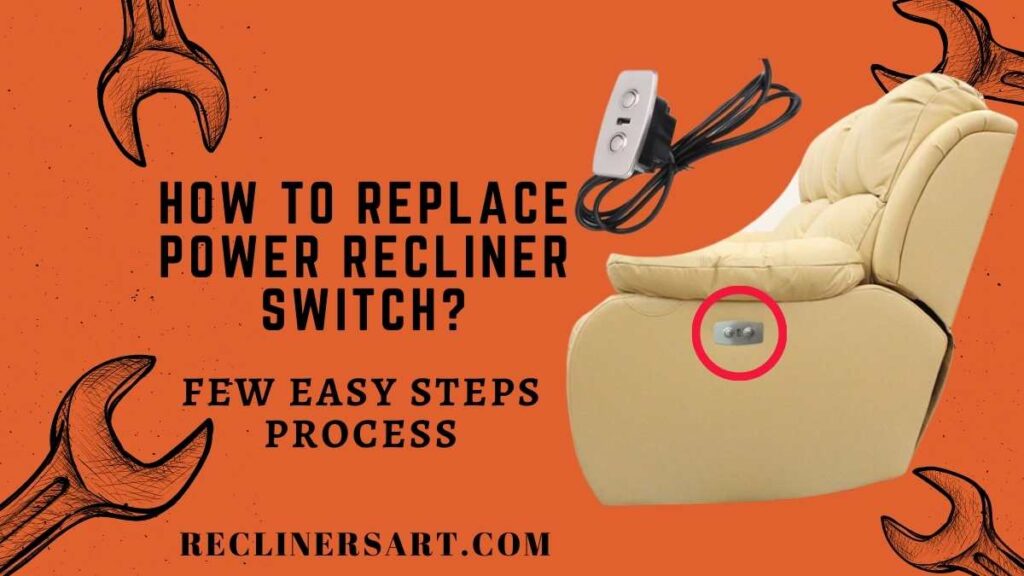
Search for a replacement power recliner remote only after matching the model number, connector, pin arrangement, and button functions.
Step 5: Listen to the Control Box and Motor
Press the close button and listen underneath the chair.
- No sound: The command may not reach the control box, or the control box may have no power.
- Control-box click only: The box may receive the command while the actuator remains disconnected or failed.
- Motor hum: The actuator may be stalled or the mechanism may be jammed.
- Grinding sound: Internal actuator gears or linkage components may be damaged.
Step 6: Reseat the Actuator Connections
Unplug the recliner first. Follow the actuator cable to the control box and disconnect it carefully. Inspect for bent pins, loose socket housings, and damaged wiring, then reconnect it securely.
Do not move connectors between control-box ports unless the labels or official wiring diagram confirm that the ports are interchangeable.
Step 7: Inspect the Actuator Mounts
The actuator normally attaches to the mechanism with pins, clips, bolts, or brackets. A loose or broken mount can let the motor run without moving the footrest properly.
Check for:
- Missing clevis pins
- Broken retaining clips
- Cracked plastic motor housings
- Bent actuator brackets
- Loose mounting bolts
- An actuator shaft sitting at an unusual angle
Step 8: Check for a Mechanical Jam
An electrical recliner can have full power and a working motor but still fail to close because the mechanism is blocked or bent. Disconnect power before removing any obstruction.
Why the Footrest Closes Unevenly or Stops Halfway
An uneven footrest is an important diagnostic clue. Common causes include:
- One broken or detached spring
- A bent linkage on one side
- A loose crossbar connection
- A missing pivot clip
- Uneven upholstery interference
- A twisted mounting bracket
- A cracked chair frame
Do not keep operating an uneven mechanism. Repeated movement can enlarge bolt holes, bend the opposite side, damage the actuator, or tear upholstery.
Use the measurement process in how to measure recliner parts before ordering replacements before purchasing springs, pins, actuators, cables, or mechanism components.
How to Check Recliner Footrest Springs
What the Springs Should Look Like
Most recliner mechanism springs should be:
- Securely hooked at both ends
- Free from cracks and missing coils
- Positioned similarly on both sides
- Clear of wiring and upholstery
- Not excessively stretched while the chair is closed
Signs the Spring Needs Replacement
- The hook is straightened or broken
- The spring has separated into two pieces
- One spring is visibly longer than its matching spring
- The footrest no longer pulls inward
- The spring repeatedly detaches from the mechanism
- The mounting hole or spring anchor is damaged
Measurements to Record
- Overall relaxed length
- Inside hook-to-hook length
- Coil-body length
- Outside coil diameter
- Wire thickness
- Hook length and direction
Take photos with a ruler beside the spring. If one side is intact and the other is broken, use the intact spring as the reference.
Ulreon 2 Pack 4 1/2'' Replacement Spring for Recliner Chair Recliner Spring for Couch Mechanism Sofa Folding Beds Trampolines RV Furniture
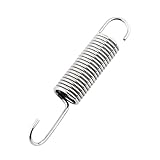
GNPADR 3-5/8 in Recliner Tension Spring, Long Neck Hook
How to Inspect the Recliner Mechanism
Inspect the mechanism with the chair unplugged and supported securely.
Look for Bent Metal
Compare matching arms on both sides. A bent arm may look twisted, bowed, or closer to the chair frame than its matching part.
Check Pivot Joints
Each pivot should move without excessive side-to-side play. Look for worn holes, loose rivets, missing washers, and metal dust.
Check the Crossbar
A crossbar keeps both sides synchronized. If it is loose, bent, or disconnected, one side may close before the other.
Check the Footrest Brackets
Make sure the upholstered footrest pad is secured evenly. A loose bracket can cause the pad to twist and bind against the chair.
Inspect the Frame Mounts
The mechanism should remain firmly attached to the wooden or metal chair frame. Tighten loose bolts and stop using the chair if the frame is split.
A complete heavy-duty recliner mechanism replacement may be necessary when multiple arms, pivots, or rivets are damaged.
Where and How to Lubricate a Recliner Footrest
Use lubricant only after confirming there are no broken or bent components.
Suitable Lubricants
- Silicone spray lubricant
- Dry PTFE lubricant
- Light machine oil applied one drop at a time
Areas to Lubricate
- Metal pivot joints
- Scissor-arm hinges
- Footrest hinge pivots
- Latch pivot points
- Crossbar joints
Areas to Avoid
- Upholstery
- Motor housings
- Electrical connectors
- Control boxes
- Belts or friction surfaces
- Latch faces that must grip securely
Place cardboard or a towel behind the joint to catch overspray. Apply a small amount, move the mechanism by hand if safe, and wipe away the excess.
Recommended Tools for Recliner Footrest Repair
- Phillips and flathead screwdrivers
- Metric and SAE socket set
- Adjustable wrench
- Allen or hex key set
- Needle-nose pliers
- Locking pliers
- Spring puller tool
- Digital multimeter for powered chairs
- Rechargeable work light
- Silicone or dry PTFE lubricant
- Digital caliper or tape measure
- Zip ties and cable clips
- Furniture blanket or padded work mat
When to Stop and Call a Recliner Repair Technician
Professional repair is the safer option when:
- The chair frame is cracked or separating
- The mechanism is badly twisted
- Several rivets or structural pivots have failed
- Electrical connectors are burned or melted
- The actuator bracket has torn away from the frame
- The recliner contains complex heat, massage, memory, or lift electronics
- You cannot support the heavy chair safely
- The mechanism remains under dangerous spring tension
- The recliner is still covered by a manufacturer or retailer warranty
Before paying for a repair, locate the chair model number, serial number, purchase date, and component labels. This information helps the technician identify parts and estimate costs accurately.
How to Prevent a Recliner Footrest from Getting Stuck
- Keep the floor clear: Do not allow cables, toys, blankets, or other items underneath the footrest.
- Do not sit on the footrest: It is designed to support legs, not full body weight.
- Close it evenly: Apply pressure near the center instead of pushing one side.
- Do not slam it: Repeated impact damages latches, rivets, springs, and frame mounts.
- Inspect wiring: Secure power and remote cables away from moving scissor arms.
- Tighten hardware: Check accessible mechanism bolts every few months.
- Clean underneath: Vacuum dust, pet hair, and debris regularly.
- Lubricate sparingly: Treat dry metal pivots every 6–12 months when needed.
- Stop when movement changes: Grinding, twisting, or sudden resistance should be investigated before more damage occurs.
- Use surge protection: Protect powered recliners from voltage spikes.
Frequently Asked Questions
Why will my manual recliner footrest not close?
The most common causes are a trapped object, weak return spring, jammed latch, bent linkage, loose hardware, dry pivot, or upholstery caught inside the mechanism.
Why does my power recliner open but not close?
The close button may be faulty, or the remote, switch cable, control box, motor connection, transformer, actuator, or mechanism may have failed. Listen for clicks or motor sounds to narrow down the problem.
Can I force a recliner footrest closed?
You can apply steady, even pressure to an unobstructed manual footrest, but never kick, jump on, or slam it. Stop if the mechanism twists, grinds, or requires excessive force.
Why does the footrest pop back open?
The closing latch may not be engaging because it is dirty, dry, loose, bent, or misaligned. A damaged locking bar or excessive upholstery interference can cause the same symptom.
Why does one side of the footrest close before the other?
This usually indicates a broken spring, bent linkage, loose crossbar, missing pivot clip, damaged bracket, or frame alignment problem.
Can lubricant fix a recliner footrest that will not close?
Lubricant may help when dry pivots or a sticky latch are causing friction. It will not repair a broken spring, bent arm, failed actuator, cracked frame, or missing hardware.
How do I know whether the return spring is broken?
Look for a detached end, broken coil, straightened hook, visibly stretched spring, or one side of the footrest that no longer pulls inward properly.
Can a weak power supply stop a recliner from closing?
Yes. The transformer may still light up or produce a control-box click while failing to deliver enough current to retract the chair under load.
Should I replace only one recliner spring?
Replace the failed spring with an exact match. When two matching springs have the same age and wear, replacing them as a pair may produce more balanced movement, provided both replacements match the original specifications.
Is it worth repairing a recliner mechanism?
Minor problems involving springs, clips, cables, bolts, switches, or power supplies are often worth repairing. Severe frame damage, widespread mechanism wear, or unavailable proprietary parts may make replacement more practical.
Conclusion
A recliner footrest that will not close usually comes down to an obstruction, weak spring, sticky latch, loose hardware, bent linkage, electrical fault, or failed actuator. Start with the simplest checks, compare both sides carefully, and never force the chair. Once you identify the exact failed component, measure it properly and match every connector, mounting point, and dimension before ordering a replacement.
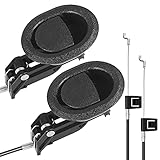
Baridwon Recliner Lever Parts, Handle with Exposed Cable 4.75in, 2 Sets | Recliner mechanism repair kit: release pull handle and cable for sofa, couch, chair; compatible with most furniture
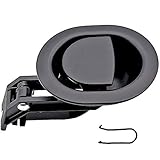
ttmagic Universal Heavy-Duty Metal Sofa Chair Recliner Release Pull Handle Replacement Parts, Fits Ashley, Lazy Boy and Most Recliner Brands, 3.5"L x 3"W x 1.2"H Handle Size
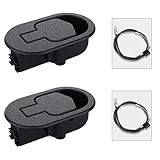
Baridwon 2 Set Recliner Replacement Parts, Durable Recliner Release Pull Handle with Recliner Pull Cable, Repair Replacement Parts Compatible with Most Furniture of Recliner Chair Sofa Couch

ttmagic Metal Recliner Handle Replacement Parts with Cable, Universal Recliner Sofa Chair Couch Release Lever Pull Handle, Fits Ashley and Major Recliner Brands, Exposed Cable Length 4.9“

ttmagic 2Pcs Metal Recliner Handle Replacement Parts with Cable, Universal Sofa Chair Couch Release Lever Pull Handle, Fits Ashley and Most Recliner Sofa Brand, Exposed Cable Length 4.9"