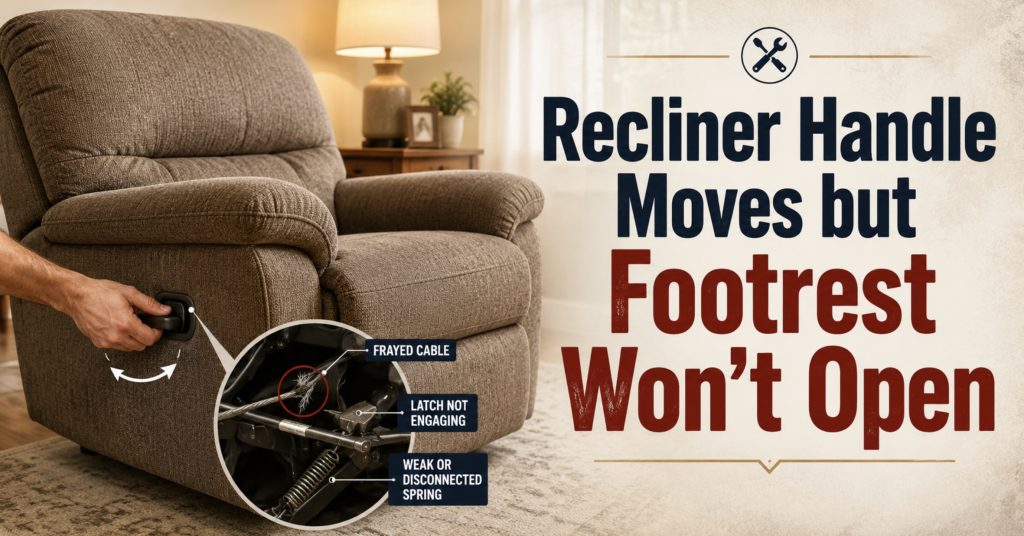
A recliner handle that moves but does not open the footrest usually means the release motion is not reaching the latch. The handle may feel normal, loose, floppy, or too easy to pull, but the real problem is often a stretched cable, broken clip, disconnected S-tip, jammed latch, weak spring, or bent mechanism.
- What This Problem Usually Means
- Quick Checks Before Taking Anything Apart
- Common Causes When the Handle Moves but the Footrest Will Not Open
- How to Diagnose the Problem
- How to Check the Recliner Release Cable
- How to Check the Recliner Handle
- How to Inspect the Release Latch
- How Springs Affect Footrest Opening
- How to Inspect the Footrest Mechanism
- How to Replace the Handle and Cable
- How to Measure the Replacement Cable
- Tools You May Need
- How to Prevent This Problem Again
- Frequently Asked Questions
What This Problem Usually Means
When the recliner handle moves but the footrest will not open, the chair is usually failing somewhere between the handle and the release latch. On most manual recliners, the handle pulls a cable. That cable pulls a small lever underneath the seat. The lever releases a latch, and the footrest mechanism springs forward.
If the handle moves but nothing happens, one of these parts is not doing its job:
- The handle may be cracked or stripped internally
- The cable may be stretched, snapped, kinked, or disconnected
- The S-hook or barrel end may have slipped out of the release lever
- The cable sheath may have popped out of its bracket
- The latch may be jammed, dirty, bent, or dry
- The footrest mechanism may be stuck under tension
- A spring may be missing, broken, or installed incorrectly
- The footrest may be blocked by fabric, an object, or bent linkage
The important thing is to avoid forcing the handle over and over. Repeated pulling can break the handle, stretch the cable more, or damage the latch bracket.
Quick Checks Before Taking Anything Apart
Start with the easy checks first. A recliner can act like it has a broken cable when something simple is blocking the footrest.
- Check under the footrest: Look for shoes, toys, blankets, power cords, pet items, or carpet edges blocking movement.
- Move the recliner forward: Make sure the back, sides, or footrest are not pressed against a wall, table, or nearby furniture.
- Listen while pulling the handle: A clicking sound underneath usually means the cable is still moving the latch. Silence often points toward a disconnected or broken cable.
- Feel the handle tension: A handle that feels too loose usually means the cable is broken, stretched, or detached.
- Compare the handle travel: If it pulls much farther than usual, the cable may no longer be anchored correctly.
- Check for fabric caught in the mechanism: Loose dust-cover fabric can jam the linkage underneath.
- Press the footrest gently inward: Sometimes the latch is under pressure and needs the footrest pushed in slightly while the handle is pulled.
If the recliner is stuck open instead of closed, the guide on recliner stuck open common causes and repairs may be the better match for that situation.
Common Causes When the Handle Moves but the Footrest Will Not Open
1. The Release Cable Is Broken Inside
This is one of the most common causes. The handle may still move because the outer cable sheath is attached, but the inner metal cable has snapped somewhere inside.
Signs include:
- The handle feels very loose
- The handle pulls with almost no resistance
- You do not hear a latch click underneath
- The footrest does not react at all
- The cable end is detached near the release lever
- The exposed cable wire does not move when the handle is pulled
A broken inner cable normally requires a replacement cable or a complete handle-and-cable kit. A recliner handle and cable replacement is usually the easiest repair when the handle and cable are sold together.
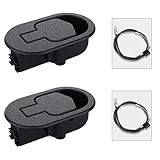
Baridwon 2 Set Recliner Replacement Parts, Durable Recliner Release Pull Handle with Recliner Pull Cable, Repair Replacement Parts Compatible with Most Furniture of Recliner Chair Sofa Couch
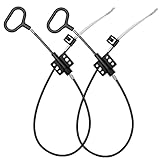
Nonley Sofa Recliner Cables, 2 Pack Couch Release Cables Recliner Replacement Parts D Ring Couch Recliner Pull Handle, Hook Exposed Cable with S Tip for Sofa, Black
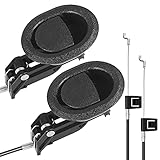
Baridwon Recliner Lever Parts, Handle with Exposed Cable 4.75in, 2 Sets | Recliner mechanism repair kit: release pull handle and cable for sofa, couch, chair; compatible with most furniture
2. The Cable Is Stretched
A stretched cable may still be connected, but it no longer pulls the latch far enough to release the footrest. This can happen after years of use, hard pulling, or repeated operation when the mechanism is stiff.
Signs include:
- The handle still has some resistance
- The latch moves slightly but not enough
- The footrest may open only if you pull very hard
- The handle travel feels longer than before
- The chair opens sometimes but not consistently
A stretched cable is usually not worth adjusting unless the recliner has an adjustable cable bracket. In most cases, replacement is the better fix.
3. The S-Hook or Cable End Slipped Out
Many recliner release cables use an S-shaped hook, Z-tip, barrel end, or small metal fitting that connects to the release lever underneath the chair. If that end slips out, the handle may still move but it will not pull the latch.
Look for:
- A loose cable end hanging underneath the chair
- A small hook no longer attached to the release lever
- A cable that moves freely without moving any metal lever
- A release lever with an empty hole or slot
If the hook is not broken, you may be able to reconnect it. If the hook is bent, cracked, or repeatedly pops out, replace the cable.
4. The Cable Sheath Came Out of Its Bracket
The inner cable needs the outer sheath to stay anchored. If the sheath slips out of its retaining bracket, the handle movement gets wasted instead of pulling the latch.
Symptoms include:
- The cable moves as a whole when the handle is pulled
- The latch lever barely moves
- The plastic cable housing is no longer seated in its metal bracket
- The handle feels softer or less direct than usual
This can sometimes be fixed by pushing the sheath back into the bracket. If the plastic end is cracked, replace the cable.
5. The Handle Is Cracked or Stripped
The handle itself can fail even when the cable is still good. Plastic handles commonly crack around the pivot point, screw holes, or cable anchor area.
Check for:
- Cracks around the handle bezel
- A handle that moves loosely in the frame
- Broken screw tabs
- A cable still attached but not being pulled correctly
- A handle that feels like it skips or slips
A metal recliner pull handle replacement can be a good upgrade if the original plastic handle keeps cracking.
6. The Release Latch Is Jammed
The handle and cable may work perfectly, but the latch underneath the chair may be stuck. Dust, rust, debris, old lubricant, bent metal, or pressure from the closed footrest can stop the latch from releasing.
Signs include:
- You hear a click but the footrest stays closed
- The cable pulls the lever, but the latch does not rotate freely
- The latch looks dirty, rusty, or dry
- The footrest opens only after pushing inward first
- The latch spring does not return properly
Clean the latch area, check alignment, and lubricate the pivot only. Do not soak the latch face where it needs to catch securely.
7. The Footrest Mechanism Is Binding
The latch may release, but the footrest mechanism may still fail to swing out because something is binding underneath. This is especially common on older recliners with dry pivots, bent links, loose hardware, or missing springs.
Possible signs include:
- The footrest tries to move but stops immediately
- One side opens slightly before the other
- You hear scraping or grinding
- The handle clicks normally but the footrest feels locked
- The mechanism looks crooked underneath
A small amount of silicone spray lubricant for recliner mechanisms can help dry pivots, but lubricant will not fix bent metal or broken springs.
8. A Spring Is Broken, Missing, or Disconnected
Springs help the footrest pop open and move smoothly after the latch releases. If a spring is missing or broken, the latch may release but the footrest may not open fully.
Look for:
- A loose spring under the chair
- A spring hanging from only one side
- One side of the footrest moving differently
- A sudden snap sound before the problem started
- The latch releases but the footrest does not spring forward
Search for recliner footrest spring replacement only after measuring the original spring length, wire thickness, coil diameter, and hook style.
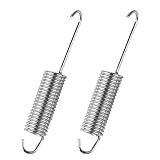
Ulreon 2 Pack 4 1/2'' Replacement Spring for Recliner Chair Recliner Spring for Couch Mechanism Sofa Folding Beds Trampolines RV Furniture
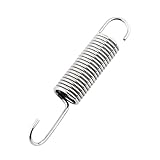
GNPADR 3-5/8 in Recliner Tension Spring, Long Neck Hook | Manufactured from stainless steel

Yoogu 3 inch Furniture Replacement Springs for Recliner Couch Sofa | 6 PCS | 3" Heavy Duty Mechanism Bed Chair Repair Tension Spring| Black| 23 Turns
9. The Recliner Frame or Bracket Is Bent
If the chair was moved roughly, overloaded, tipped, or used with weight on the footrest, the mounting bracket or linkage can bend. A bent mechanism may hold the latch under pressure or prevent the footrest from moving after release.
Warning signs include:
- The footrest looks crooked when closed
- The handle feels normal but the chair does not release
- One side of the mechanism sits lower
- There are shiny scrape marks on the metal arms
- Bolts are pulling out of the wood frame
- The chair makes popping or cracking sounds
Stop using the recliner if the frame is split or the mechanism is pulling away from the chair.
How to Diagnose the Problem
Follow this order so you do not replace the wrong part.
Step 1: Pull the Handle and Listen
Pull the handle normally and listen underneath the chair.
- No click: The cable may be broken, detached, stretched, or the handle may be stripped.
- Click but no movement: The latch may release, but the mechanism may be jammed, dry, or missing spring tension.
- Partial movement: The cable may be stretched, the latch may be misaligned, or the footrest may be binding.
- Grinding or scraping: Check for bent linkage, loose hardware, or obstruction.
Step 2: Check Handle Tension
A healthy handle usually has a firm pull and returns normally. A failed system may feel different.
- Very loose handle: Broken cable, detached cable end, or cracked handle anchor.
- Very stiff handle: Jammed latch, kinked cable, or binding release lever.
- Normal handle feel: Latch or mechanism may be the issue instead of the handle.
Step 3: Tip the Recliner Safely
Place a furniture blanket on the floor and carefully tip the recliner onto its side or back. Ask another person to help if the chair is heavy.
Step 4: Follow the Cable Path
Start at the handle and follow the cable underneath the chair to the release lever. Look for broken, kinked, pinched, or disconnected sections.
Step 5: Watch the Latch While Pulling the Handle
Have a helper gently pull the handle while you watch the latch underneath. Keep fingers away from moving parts.
- If the cable does not move, the cable or handle has failed.
- If the cable moves but the latch does not, the cable end or sheath may be disconnected.
- If the latch moves but the footrest stays closed, the latch or mechanism may be jammed.
- If the footrest starts to move but stops, check springs, pivots, and linkage arms.
How to Check the Recliner Release Cable
The release cable is the main part to inspect when the handle moves but the footrest will not open.
Where the Cable Usually Fails
- Near the handle pivot
- At the plastic cable anchor
- Where the cable bends under the seat
- At the S-hook or barrel end
- Where the outer sheath clips into a bracket
- Where the cable rubs against the mechanism
Signs the Cable Is Bad
- The inner wire does not move when the handle is pulled
- The cable end is frayed or snapped
- The S-hook is missing or bent open
- The outer sheath is cracked
- The cable is kinked sharply
- The cable slips out of the bracket
- The cable has stretched and no longer pulls the latch far enough
The guide on how to replace a recliner release cable without removing the upholstery is useful once you confirm the cable is the failed part.
Can You Adjust the Cable?
Some recliners have a small amount of adjustment at the cable bracket or latch lever. If the cable is only slightly stretched, adjusting the sheath position may restore enough pull to release the latch.
However, adjustment will not fix:
- A snapped inner wire
- A broken S-hook
- A cracked plastic cable end
- A badly kinked cable
- A handle anchor that has broken
In those cases, replacement is the better option.
How to Check the Recliner Handle
Manual recliner handles can be plastic, metal, D-ring style, flapper style, lever style, or recessed side handles. The handle must pull the cable smoothly without slipping.
Inspect the Outside
Look for:
- Cracked handle body
- Loose screws
- Missing mounting screws
- A handle that sits crooked
- A broken trim bezel
- A lever that does not spring back
Inspect Behind the Handle
Remove the screws carefully and pull the handle out just enough to inspect the cable connection.
Check for:
- Cable still attached to the handle
- Broken plastic hook inside the handle
- Frayed cable wire
- Cracked cable housing
- Wrong replacement handle installed previously
When to Replace the Handle Only
Replace only the handle if the cable is still in good condition and the break is clearly inside the handle body or mounting area.
When to Replace the Handle and Cable Together
Replace both when the cable is frayed, stretched, kinked, disconnected, too short, or permanently attached to the handle. Complete kits are often easier than trying to reuse an old cable.

Baridwon 2 Sets Recliner Replacement Parts - Metal Recliner Handle, Release Pull Cable Fits Ashley & Most Recliner Sofas, Exposed Cable Length 5.1 Inches
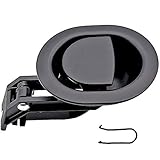
ttmagic Universal Heavy-Duty Metal Sofa Chair Recliner Release Pull Handle Replacement Parts, Fits Ashley, Lazy Boy and Most Recliner Brands, 3.5"L x 3"W x 1.2"H Handle Size
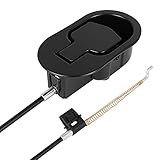
Nonley Heavy-Duty Metal Recliner Handle Replacement Parts with Cable, Recliner Pull Handle Release Fits Most Major Recliner Couch Sofa Chair
How to Inspect the Release Latch
The latch is the metal piece that holds the footrest closed until the cable pulls it open. If the latch does not rotate or return correctly, the footrest may stay locked even when the handle moves.
Signs of a Latch Problem
- The cable pulls the latch, but the latch barely moves
- The latch moves but does not release the locking bar
- The latch stays partly open or partly closed
- The latch spring is missing or disconnected
- The latch is rusty, dirty, or packed with debris
- The locking bar and latch do not line up
How to Clean and Free the Latch
- Vacuum debris from the latch area
- Remove fabric or cords caught near the latch
- Check that the latch lever is not bent
- Apply a tiny amount of lubricant to the pivot point only
- Move the latch gently by hand with the chair supported
- Wipe away excess lubricant
Do not spray lubricant heavily onto the locking face. The latch needs to grip and hold the footrest securely after it closes.
How Springs Affect Footrest Opening
Springs help store and release tension in the footrest mechanism. Depending on the chair design, they may help the footrest pop open, control closing tension, or balance the reclining motion.
Spring Problems That Can Affect Opening
- A spring has snapped and no longer helps the footrest open
- A spring has slipped off its hook
- A spring is installed in the wrong hole
- A spring is stretched and weak
- A spring is rubbing against another part
- A spring anchor point is bent or broken
How to Inspect Springs Safely
- Do not grab springs with bare fingers while they are under tension
- Compare the left and right sides of the mechanism
- Look for a loose spring on the floor under the chair
- Check both hook ends for straightening or cracks
- Photograph the spring location before removal
- Measure the spring before ordering a replacement
If you are not sure which spring type you need, the article on why recliner cables snap and how to prevent it is also helpful because stiff mechanisms and neglected moving parts can put extra stress on the release cable and handle system.
How to Inspect the Footrest Mechanism
If the handle, cable, and latch all move, but the footrest still does not open, the metal mechanism may be jammed.
Check for Obstructions
Look for:
- Cords wrapped around the linkage
- Loose dust-cover fabric
- Staples caught in the mechanism
- Blankets or clothing
- Small toys
- Pet items
- Rug edges
Check for Bent Metal
Compare both sides of the footrest mechanism.
- Do both sides sit at the same angle?
- Does one side look twisted or bowed?
- Are there fresh scrape marks?
- Are the footrest brackets even?
- Are any rivets pulling sideways?
Check Loose Hardware
Loose bolts can shift the linkage enough to stop the footrest from opening smoothly.
- Check mounting bolts
- Look for missing washers
- Inspect retaining clips
- Check pivot pins
- Look for metal dust around joints
Check Dry Pivot Points
Dry pivots can create enough resistance that the latch releases but the footrest does not move.
Use a light amount of lubricant on:
- Scissor-arm pivots
- Footrest hinge joints
- Crossbar pivots
- Latch pivots
- Spring attachment points
Keep lubricant away from upholstery, wood finishes, electrical parts, and locking surfaces.

B’Laster Silicone Lubricant ProStraw – Non-Staining Silicone Spray for Metal Parts – Long-Lasting Protection, Reduces Friction & Wear – Works on Metal, Rubber & Plastic – 11 oz (Case of 2)

CRC Heavy Duty Silicone Lubricant Spray - Dry Film, Water Resistant - 11 oz | Dry Film Silicone Spray, Rubber & Nylon Lubrication, Metal & Non-Metal Protection, Water Resistance

Permatex 80070 Silicone Spray Lubricant, 10.25 oz. net Aerosol Can
How to Replace the Handle and Cable
If the cable is snapped, stretched, detached, or frayed, replacing the handle-and-cable assembly is usually the most direct fix.
Step 1: Order the Correct Replacement
Match the old cable before removing it completely. Measure the total length, exposed cable length, handle size, screw spacing, and end fitting.
Step 2: Open the Handle Area
Remove the screws holding the side handle. Pull the handle out gently so you can see how the cable attaches.
Step 3: Photograph the Cable Route
Take photos from the handle to the latch. Pay attention to clips, brackets, routing holes, and where the cable avoids moving linkage arms.
Step 4: Disconnect the Cable from the Handle
If the cable is separate from the handle, unhook it carefully. If the cable and handle are one piece, remove them together.
Step 5: Disconnect the Cable from the Release Lever
Under the chair, unhook the S-tip, Z-tip, barrel end, or spring-style end from the release lever. Do not bend the release lever.
Step 6: Remove the Old Cable
Pull the cable out of its clips and brackets. Avoid cutting anything until you understand the original routing.
Step 7: Install the New Cable
Route the new cable the same way as the old one. Make sure the outer sheath is seated firmly in the bracket and the inner cable moves freely.
Step 8: Attach the Handle
Reconnect the cable to the handle and secure the handle to the side of the chair. Do not overtighten screws into wood or thin side panels.
Step 9: Test Before Fully Using the Chair
Pull the handle gently while watching the latch. Confirm the latch moves fully and the footrest opens smoothly.
Step 10: Check Cable Clearance
Open and close the footrest several times. Make sure the cable does not rub, stretch, pinch, or touch moving scissor arms.

Baridwon Recliner Replacement Parts, Handle with Exposed Cable 5.1in, 1 Set | Recliner release handle repair kit: durable pull cable for sofa, couch, chair; compatible with most furniture; exposed 5.1in
Baridwon Recliner Lever Parts, Handle with Exposed Cable 4.75in, 2 Sets | Recliner mechanism repair kit: release pull handle and cable for sofa, couch, chair; compatible with most furniture

Baridwon Recliner Lever Parts, Handle with Exposed Cable 4.75in, 1 Set | Recliner mechanism repair kit: release pull handle and cable for sofa, couch, chair; compatible with most furniture
How to Measure the Replacement Cable
A recliner cable can look almost identical online and still be wrong by half an inch, one end fitting, or one handle shape. Measuring carefully saves a lot of frustration.
Measure These Details
- Total cable length: Measure from one end of the outer sheath to the other.
- Exposed wire length: Measure the inner wire that sticks out beyond the sheath.
- Handle size: Measure the length and width of the handle plate.
- Screw-hole spacing: Measure center-to-center between mounting screw holes.
- End fitting: Identify S-tip, Z-tip, barrel end, spring end, or other connector style.
- Cable sheath ends: Compare the shape of the plastic or metal ends that seat into brackets.
- Cable route: Check whether the cable needs a straight, angled, or longer routing path.
The guide on how to measure recliner parts before you order can help you compare handle size, cable length, exposed wire, connector shape, and other small compatibility details before buying.
Common Cable Matching Mistakes
- Only measuring the handle and ignoring the cable length
- Buying the right cable length with the wrong end fitting
- Ignoring exposed wire length
- Assuming every S-tip cable is the same
- Choosing a handle that does not fit the side-panel cutout
- Forgetting to compare screw spacing
- Buying a cable that is too short for the original route
Tools You May Need
- Phillips screwdriver
- Flathead screwdriver
- Needle-nose pliers
- Socket wrench set
- Allen or hex key set
- Flashlight or rechargeable work light
- Tape measure or digital caliper
- Spring puller tool
- Silicone spray lubricant
- Zip ties or cable clips
- Furniture blanket or padded mat
- Small container for screws
A recliner repair tool kit can be helpful if you plan to fix handles, cables, springs, and other manual recliner parts yourself.
How to Prevent This Problem Again
- Do not yank the handle: Pull smoothly instead of jerking the lever hard.
- Keep the mechanism clean: Vacuum dust, pet hair, and debris from underneath the chair.
- Lubricate dry pivots lightly: A stiff mechanism makes the cable work harder.
- Do not sit on the footrest: Extra weight can bend linkage and overload the release system.
- Route the cable safely: Keep it away from scissor arms and sharp metal edges.
- Fix stiffness early: If the footrest gets harder to open, inspect it before the cable snaps.
- Use the correct replacement cable: A slightly wrong cable can fail quickly.
- Check mounting screws: Loose handles flex more and can crack around the screw holes.
- Do not force a jam: If the latch or footrest is stuck, find the cause before pulling harder.
Frequently Asked Questions
Why does my recliner handle move but the footrest will not open?
The most common causes are a broken or stretched release cable, disconnected cable end, cracked handle, loose cable sheath, jammed latch, broken spring, or binding footrest mechanism.
How do I know if my recliner cable is broken?
If the handle feels loose, you hear no latch click, or the inner cable does not move when the handle is pulled, the cable is likely broken or disconnected.
Can a recliner handle break without the cable breaking?
Yes. The handle can crack internally, strip around the pivot, or break where the cable attaches. In that case, the cable may still be usable if it is not frayed or stretched.
Can I open the footrest manually if the cable is broken?
Sometimes. You may be able to reach underneath and move the release lever by hand, but keep fingers away from springs and linkage. The footrest can pop open suddenly.
Why does the handle feel loose?
A loose handle usually means the cable snapped, stretched, detached from the latch, slipped out of its bracket, or broke inside the handle.
Why does the handle feel stiff?
A stiff handle can mean the cable is kinked, the latch is jammed, the mechanism is binding, or the footrest is under pressure.
Can I just reconnect the cable?
Yes, if the S-hook or cable end simply slipped out and is not damaged. If it keeps disconnecting, the hook, latch lever, cable sheath, or bracket may be worn.
Do I need to replace the handle and cable together?
Not always. Replace only the failed part if the other is still good. However, many recliner handles and cables are sold as one kit, which can make replacement easier.
How do I measure a recliner release cable?
Measure total cable length, exposed wire length, handle plate size, screw-hole spacing, and the end fitting style. Compare these details before ordering.
Are recliner release cables universal?
No. Many look similar, but cable length, exposed wire length, handle size, screw spacing, and end fittings can vary.
Can lubricant fix a recliner that will not open?
Lubricant may help if dry pivots or a sticky latch are causing friction. It will not fix a broken cable, cracked handle, missing spring, bent linkage, or damaged frame.
Why does the latch click but the footrest still will not open?
The latch may be releasing, but the footrest mechanism may be jammed, dry, bent, blocked, or missing spring tension.
Is replacing a recliner handle cable difficult?
It is usually a beginner-friendly repair if you can access the underside of the chair, route the cable correctly, and match the original cable measurements.
Should I call a repair technician?
Call a technician if the frame is cracked, the mechanism is badly bent, the spring tension looks unsafe, or you cannot safely tip and support the recliner.
Conclusion
When a recliner handle moves but the footrest will not open, start with the cable path. Check the handle, cable end, sheath bracket, latch, springs, and mechanism before ordering parts. In many cases, a correctly matched handle-and-cable kit restores the footrest quickly, but measuring the original part carefully is what makes the repair successful.
Baridwon 2 Set Recliner Replacement Parts, Durable Recliner Release Pull Handle with Recliner Pull Cable, Repair Replacement Parts Compatible with Most Furniture of Recliner Chair Sofa Couch
Baridwon Recliner Lever Parts, Handle with Exposed Cable 4.75in, 2 Sets | Recliner mechanism repair kit: release pull handle and cable for sofa, couch, chair; compatible with most furniture

Nonley Recliner Pull Handle - Universal Replacement Parts for Most Major Recliner Couch Sofa Chair Furniture
ttmagic Universal Heavy-Duty Metal Sofa Chair Recliner Release Pull Handle Replacement Parts, Fits Ashley, Lazy Boy and Most Recliner Brands, 3.5"L x 3"W x 1.2"H Handle Size

ttmagic Metal Recliner Handle Replacement Parts with Cable, Universal Recliner Sofa Chair Couch Release Lever Pull Handle, Fits Ashley and Major Recliner Brands, Exposed Cable Length 4.9“