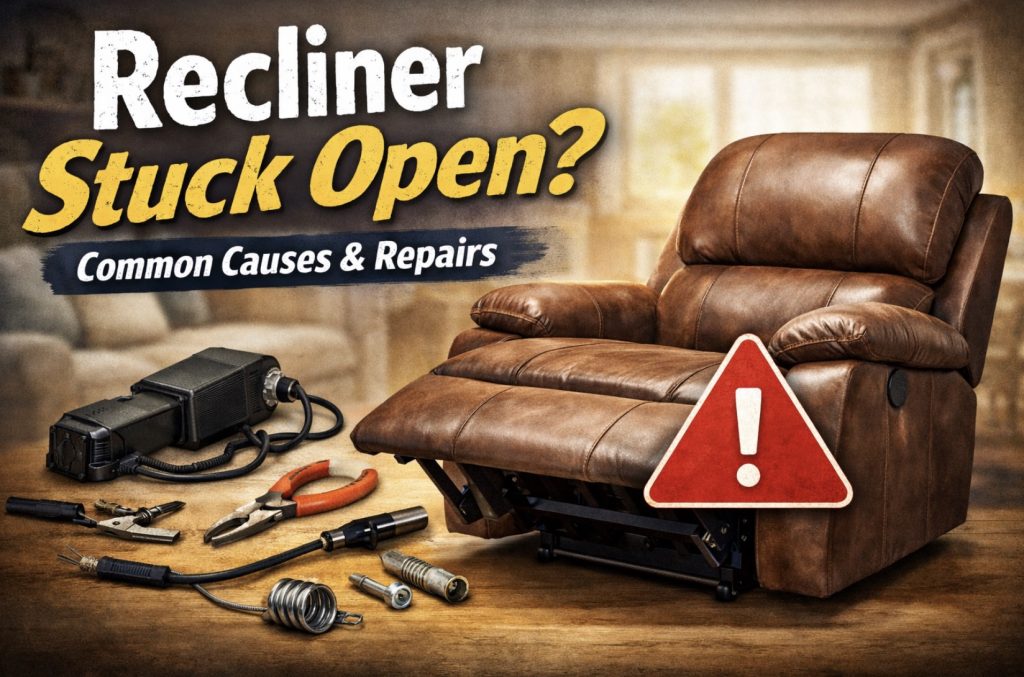
A recliner that will not close is more than an annoyance. It can block walkways, strain the mechanism, make the chair uncomfortable to use, and sometimes leave you wondering whether the whole thing is finished. The good news is that a recliner stuck open usually comes down to a few common issues: a failed release cable, a bent linkage, a tired spring, a jammed latch, or a power problem if the chair is electric.
This guide walks through the most common reasons a recliner gets stuck open, how to tell manual and power failures apart, what you can safely inspect at home, and which repairs are usually worth trying before you replace the chair. We will also cover the parts and tools that commonly fix the problem, along with the warning signs that mean you should stop forcing the mechanism and take a different approach.
First Check: Is It Manual or Power?
- Manual recliner: Usually has a side pull handle, lever, or push-back mechanism. If it is stuck open, the problem is often mechanical: latch, cable, spring, linkage, or frame alignment.
- Power recliner: Uses buttons, a switch panel, or a remote. If it is stuck open, the cause may be electrical, mechanical, or both.
- Lift recliner: Needs even more caution because closing and standing mechanisms work together. Do not force movement if the chair is in an unstable position.
If your chair is electric and you need a backup way to reposition it before deeper troubleshooting, the guide on how to manually recline an electric recliner is the best related reference to read first.
Common Reasons a Recliner Gets Stuck Open
Most stuck-open recliners fail in one of two ways: the closing action is no longer being triggered, or the mechanism is being physically blocked from returning.
- Broken or stretched release cable: Very common on manual recliners. The handle may feel loose, floppy, or suddenly easier to pull than normal.
- Worn or broken tension spring: Springs help control movement and return force. When one weakens or snaps, the footrest or linkage may not fold back properly.
- Jammed latch mechanism: Dirt, rust, bent tabs, or a misaligned latch can keep the chair from unlocking or re-locking correctly.
- Bent linkage or twisted scissor mechanism: If the chair was forced, sat on unevenly, or closed with something trapped under it, the metal linkage may no longer track smoothly.
- Obstruction under the chair: Toys, pet items, cords, carpet bunching, and even loose upholstery fabric can stop the mechanism from completing its travel.
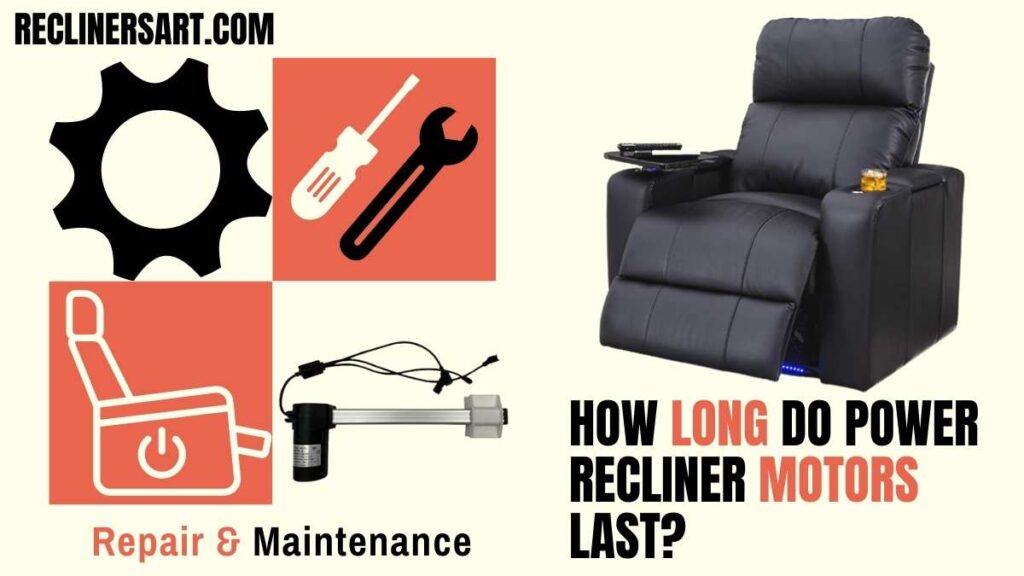
- Failed actuator or motor: On power recliners, the motor may hum, click, or do nothing at all while the footrest stays extended.
- Dead power supply, remote, or switch: Sometimes the chair is not mechanically stuck at all; it just is not receiving the command or power needed to close.
- Loose hardware: Missing bolts, loose pivot nuts, or widened mounting holes can throw the mechanism out of line enough to jam it.
- Frame damage: A cracked wood rail or bent metal support can cause the geometry to shift, especially on older or heavily used chairs.
Manual Recliner Repairs
Manual recliners usually get stuck open because the release system or the footrest mechanism is no longer moving in sync.
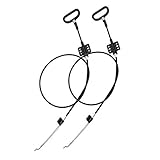
- Check the handle tension: If the handle suddenly feels loose, the release cable may be disconnected, stretched, or snapped. A recliner handle with cable kit is one of the most common fixes.
- Inspect the cable path: Look underneath the chair for a frayed sheath, a broken end fitting, or a cable that has popped off the release arm.
- Check the latch area for grime or binding: A little debris or corrosion can keep the closing side of the mechanism from engaging properly. A light application of silicone spray lubricant on pivot points can help, but do not soak upholstery or flood enclosed parts.
- Inspect the return and tension springs: If a spring is broken, stretched, or missing, the chair may not fold back into place. Matching recliner tension springs by length and hook style is important.
- Look for bent metal arms or twisted linkage: If one side of the footrest moves differently from the other, the mechanism may be out of alignment rather than simply worn out.
- Tighten obvious loose hardware: Pivot bolts and linkage nuts that back off over time can create just enough slop to jam the mechanism.
If the release cable is your likely culprit, the step-by-step guide on how to replace a recliner release cable without removing the upholstery is one of the most relevant internal references for this repair.

ttmagic Metal Recliner Handle Replacement Parts with Cable, Universal Recliner Sofa Chair Couch Release Lever Pull Handle, Fits Ashley and Major Recliner Brands, Exposed Cable Length 4.9“
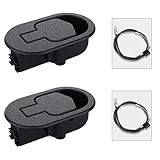
Baridwon 2 Set Recliner Replacement Parts, Durable Recliner Release Pull Handle with Recliner Pull Cable, Repair Replacement Parts Compatible with Most Furniture of Recliner Chair Sofa Couch

KUANYUOO Universal Heavy-Duty Metal Pull Recliner Handle with Cable (Exposed Adjustable 4.7" to 5.2"), Fits Ashley and Other Manufacturer Brands Chair Release Handle for Sofa or Recliner
Power Recliner Repairs
With power recliners, start by deciding whether the issue is electrical control, power delivery, or a jammed mechanical load.
- No sound, no motion: Check the wall outlet, transformer, extension lead, control box, and all low-voltage connectors. A failed 29V recliner power supply is a common reason the chair stays open.
- Clicking but no movement: The control system may be trying to send power, but the motor may be stalled or the linkage may be jammed.
- Motor hums briefly then stops: That often points to an overloaded actuator, obstruction, or failing motor.
- Moves in one direction only: The switch, remote, or control box may be at fault. Sometimes a compatible power recliner remote replacement solves the problem if the existing handset is dead or inconsistent.
- Check for pinched wires: Cables under the chair can get trapped in moving hardware and cut power when the chair tries to close.
- Inspect the actuator mounts: If the actuator is loose at one end or mounted crooked, the mechanism may bind under load and stop mid-travel.
When power components are involved, never keep pressing the button repeatedly if the chair strains, clicks, or twists. That can turn a small fault into a burned motor or bent mechanism.
Step-by-Step Troubleshooting Order
Working in the right order prevents you from replacing the wrong part.
- Step 1: Unload the recliner. Remove blankets, side tables, pets, toys, and any item that may be blocking movement. Make sure nothing is wedged under the footrest.
- Step 2: Unplug power models before inspecting underneath. Safety first. Never put your hands in the mechanism while the chair is energized.
- Step 3: Watch both sides of the linkage. Open-bottom recliners let you compare left and right movement. If one side hangs up, you are likely dealing with a mechanical alignment issue.
- Step 4: Test the handle or switch feel. Loose manual handle means cable suspicion; dead electric buttons point first to power or control issues.
- Step 5: Inspect springs, pivots, and latch points. Use a compact work light so you can clearly see broken hooks, missing bolts, and rubbing marks.
- Step 6: Lubricate pivot points lightly. Use an appropriate lubricant on exposed metal pivots only, then retest gently.
- Step 7: Check the power path on electric chairs. Outlet to transformer, transformer to control box, control box to remote and motor.
- Step 8: Replace the most likely failed simple part first. Cables, remotes, and transformers are usually easier and cheaper than motors or full mechanism assemblies.
For spring-related failures, the detailed guide on recliner tension spring replacement is especially useful because a weak or broken spring can make a recliner feel jammed even when the latch and handle still work.
What Not to Do
- Do not force the footrest shut with body weight: That often bends linkage arms or strips mounting points.
- Do not keep hammering the handle or power button: Repeated force can worsen a jam or burn out a motor.
- Do not lubricate everything blindly: Too much spray attracts dirt and can reach fabric, wood, or electrical connectors.
- Do not replace parts by guesswork alone: Similar-looking motors, remotes, and springs are not always interchangeable.

Power Recliner Power Supply, Sopito 2-Pin AC/DC Adapter 100-240V 50/60hz

Power Recliner Power Supply, AC/DC Switching Power Supply Transformer 2-pin 29V/24V 2A Adapter with AC Power Cord for Electric Power Recliner Lift Chair
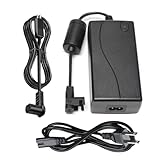
Universal Power Cord for Recliner Chair, 2-pin 29V 2A Recliner Power Supply Whit Magnetic Ring Extension Cable Compatible with Most Models for Recliner, Lift Chairs and Sofa
Helpful Parts and Tools
- Recliner handle with cable kits for loose-handle or no-release manual recliners.
- Replacement tension springs for footrest return and support issues.
- 29V recliner power supplies for common electric recliner power failures.
- Replacement power recliner remotes when the handset or button control is the weak point.
- Silicone spray lubricant for exposed pivots and linkage contact points.
- Needle-nose pliers for clips, spring ends, and tight spaces.
- Compact work lights to inspect the underside clearly.
- Recliner handle with cable kits – common fix for manual recliners that will not release or close correctly.
- Recliner tension springs – important when the footrest mechanism feels weak, uneven, or stuck.
- 29V recliner power supplies – frequent solution for power recliners stuck in one position.
- Power recliner remote replacements – useful if the chair has power but the controls are unresponsive.
- Silicone spray lubricant – helps free sticky pivots without heavy residue.
When to Stop and Call for Help
- The frame looks cracked or twisted: Structural damage often means part replacement alone will not solve it.
- The mechanism binds hard on one side: This can indicate bent linkage that may need more than a simple home adjustment.
- You smell overheating on a power recliner: Stop using it immediately and disconnect power.
- The chair supports someone with limited mobility: If safe transfers depend on the recliner, a temporary DIY experiment may not be worth the risk.
- You cannot identify the failed part confidently: It is better to pause than to order random components and make the problem more expensive.
FAQ: Recliner Stuck Open
Why is my recliner stuck open and will not close?
Usually because something in the release or return path has failed: cable, spring, latch, linkage, actuator, power supply, or remote depending on the type of recliner.
Can I force a recliner closed?
You should not. Forcing it shut can bend the mechanism, strip mounts, or worsen a small issue that was originally repairable.
What is the most common manual recliner fix?
A worn or broken release cable is one of the most common fixes, especially when the handle feels loose or stops triggering the latch.
What is the most common power recliner fix?
A failed transformer, dead remote, loose connector, or worn actuator are common causes. Start with the power path before assuming the motor is bad.
How do I know if the spring is bad?
The chair may feel uneven, weak when closing, or visibly missing a spring under the seat or footrest mechanism. Springs can also stretch enough to stop helping even before they fully break.
Is it worth fixing a recliner that is stuck open?
Often yes. Many stuck-open recliners need relatively affordable parts like a cable, spring, remote, or power supply rather than a full replacement chair.
Conclusion
A recliner stuck open does not automatically mean the chair is done for. In many cases, the repair comes down to a failed release cable, a bad spring, a jammed latch, or a simple power issue. The key is to diagnose in a logical order: clear obstructions, inspect the linkage, compare both sides of the mechanism, then test the handle or power path before buying parts. Done carefully, many recliners can be returned to smooth, safe operation without replacing the whole chair.
ttmagic Metal Recliner Handle Replacement Parts with Cable, Universal Recliner Sofa Chair Couch Release Lever Pull Handle, Fits Ashley and Major Recliner Brands, Exposed Cable Length 4.9“
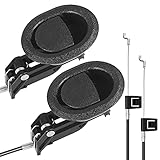
Baridwon Recliner Replacement Parts with Pull Handle and Release Cable (2-Sets), Repair Recliner Mechanism Parts Compatible with Most Furniture of Recliner Sofa Couch Chair
Baridwon 2 Set Recliner Replacement Parts, Durable Recliner Release Pull Handle with Recliner Pull Cable, Repair Replacement Parts Compatible with Most Furniture of Recliner Chair Sofa Couch

Baridwon 2 Sets Recliner Replacement Parts - Metal Recliner Handle, Release Pull Cable Fits Ashley & Most Recliner Sofas, Exposed Cable Length 5.1 Inches
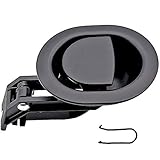
ttmagic Universal Heavy-Duty Metal Sofa Chair Recliner Release Pull Handle Replacement Parts, Fits Ashley, Lazy Boy and Most Recliner Brands, 3.5"L x 3"W x 1.2"H Handle Size