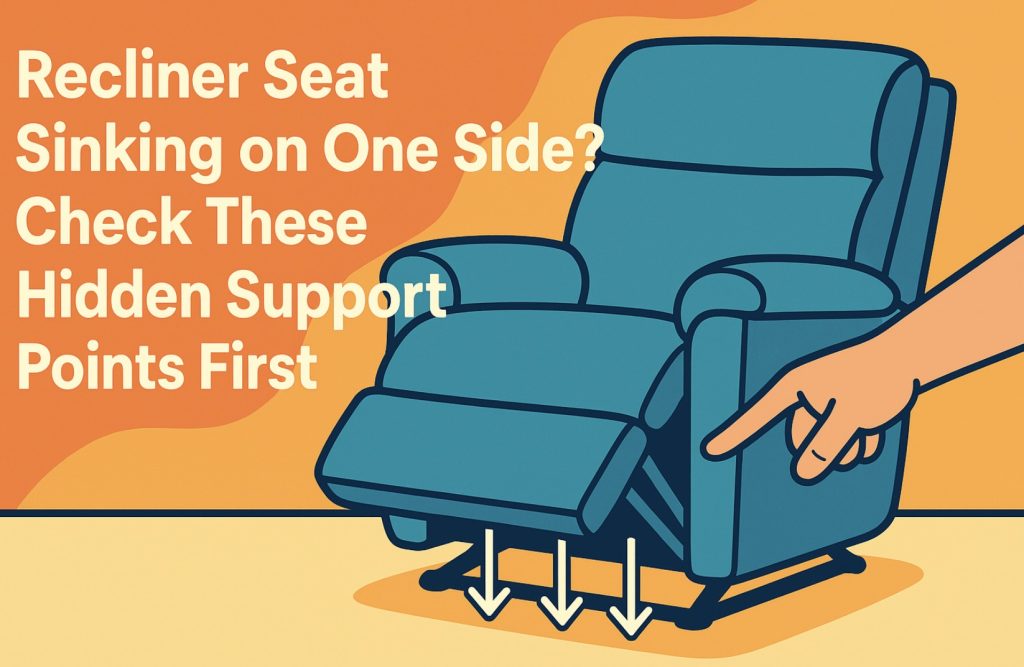
A recliner that sinks on one side feels wrong the second you sit down. The good news? A crooked seat usually points to a few specific trouble spots: broken springs, a cracked frame rail, or missing/loose bolts on that side. This guide shows you how to track down the real cause and fix it step by step.
Common Symptoms of a Recliner Sinking on One Side
- Seat leans left or right: You feel pulled toward one arm when you sit in your normal spot.
- One corner feels soft or hollow: Pressing down near that corner feels mushy compared to the other side.
- Clicking or popping when you sit: A spring, clip, or frame joint is moving or opening up under load.
- Visible tilt when viewed from the front: The seat cushion — or even the arm on that side — sits noticeably lower.
Safety & Setup
- Unplug power recliners: Always disconnect power (and battery pack if present) before flipping the chair.
- Work with a helper: Recliners are heavy and awkward. Have someone steady the frame while you inspect underneath.
- Protect your hands & eyes: Wear work gloves and safety glasses — broken springs and sharp staples are no joke.
- Use good lighting: A rechargeable work light makes spotting cracks and missing clips much easier.
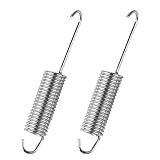
2 Pack 4-1/2 Inch Recliner Spring Stainless Steel Tension Spring Heavy Duty Rust-Resistant Spring Replacement for Recliner Mechanism Sofa Bed Folding Beds Trampolines RV Furniture Long Neck Hook

kzfuli 3-5/8 Inch Replacement Recliner Chair Mechanism Furniture Tension Springs Long Neck Style ,Long Neck Hook Style-Recliner Replacement Parts-3.46 Inch Inside Hook to Hook (Silver White 2Pcs)

Aocies 4-3/4 inch Recliner Sofa Chair Replacement Springs (2 pcs) Mechanism Tension Sofa Chair Stainless Steel Spring
How a Recliner Seat Is Supported (Where One-Sided Sag Starts)
Under the cushion, most recliner seats share the same basic support layers:
- Cushion foam/core: Comfort layer that can flatten, but rarely causes a one-sided lean by itself.
- Seat deck: Webbing straps or a thin board under the cushion that spreads weight.
- Support springs: Serpentine (zig-zag) springs, coils, or webbing that actually carry your weight.
- Frame rails: Wood or metal rails along the sides/front that the springs attach to.
- Mounting hardware: Bolts and brackets that tie the seat frame to the base and arms.
When only one side sinks, you’re usually looking for a failure in one of three places on that side:
- A broken or detached spring.
- A cracked/split frame rail or deck.
- A missing or loose bolt/bracket at a key joint.
If you’re not sure what kind of mechanism or spring layout you have, our visual breakdown in Types of Recliner Mechanism is a good warm-up before you go digging.
Step 1: Check Springs on the Low Side
Goal: Find broken, stretched, or unhooked springs that let one side drop.
- Rule out a cushion-only issue: Swap cushions left/right (if possible) and test. If the sag follows the cushion, you just need a new core or a high-density foam insert.
- Remove the cushion: Take the cushion off entirely and sit briefly on the bare deck. If it’s still low on the same side, it’s structural.
- Flip the recliner safely: With a helper, tip the chair onto its back or side on a blanket so you can see the underside.
- Follow the low corner: Look directly under the side that sinks. Find the row(s) of serpentine (zig-zag) springs or webbing in that area.
- Compare to the good side: Broken serpentine runs, missing clips, or springs that dip much lower than the opposite side are your prime suspects.
If you find damaged springs or clips, your fix is usually straightforward: replace that run and its hardware. For a deeper, photo-heavy walkthrough on measuring and swapping springs, see our dedicated Recliner Tension Spring Replacement Guide.
Spring-Related Parts to Check
- Serpentine (zig-zag) spring kits — replacement runs you can cut to length.
- Upholstery spring clips — anchor springs to frame rails securely.
- Hog-ring pliers and rings — tie springs to border wire so they don’t roll or twist.
Step 2: Inspect Frame Rails & Seat Deck
If springs look intact and evenly tensioned, your next suspect is the frame or deck on that side.
- Trace the load path: From the sagging seat area, follow down to the side frame rail and front rail under that corner.
- Look for cracks and splits: Hairline cracks around knots, screw holes, or corners can open under weight and drop that side.
- Check corner blocks: Many recliners use glued/screwed blocks to tie rails together. Loose or broken blocks let a joint flex and sink.
- Inspect the seat deck: If you have a thin plywood/board seat, look for delamination, water damage, or a crack that lines up with the sagging area.
Light damage can sometimes be reinforced rather than fully rebuilt.
- Bridge cracks with steel mending plates or corner braces.
- Use high-strength wood glue and clamps to close small splits before you reinforce.
- Replace any pulverized or rotted boards rather than trying to patch them.
If the frame is badly shattered or multiple rails are cracked, it may be time to stop sinking money into the repair and start shopping for a safer replacement. When you get there, tools like the Recliner Size Calculator can help you choose a chair with the right proportions and weight rating so it holds up better over time.
Step 3: Find Missing Bolts, Screws & Brackets
Sometimes the structure is fine, but the seat frame isn’t firmly tied to the base or arm on one side.
- Compare both sides: Look at the points where the seat frame meets the base, arms, and mechanism brackets on the good side, then mirror that inspection on the low side.
- Spot what’s missing: A single missing bolt, sheared screw, or bent bracket can let that side float lower under load.
- Tighten and replace: Use a ratcheting socket set and quality hardware. Add locking washers where bolts have a history of loosening.
Avoid over-tightening into wood (which can strip or crush fibers). If a screw hole is blown out, you may need to plug it with a dowel/wood glue and re-drill.
- Serpentine spring kits — replace broken seat/back runs on the low side.
- Upholstery webbing kits — rebuild stretched or failed seat decks under the cushion.
- Steel mending plates & braces — reinforce cracked frame rails or joints.
- High-density cushion foam inserts — fix cushion-only sag if the frame is solid.
Quick Parts & Tools (Amazon)
- Work light and safety glasses for safer under-chair inspections.
- Ratcheting socket set and hex key set for tightening/replacing hardware.
- Spring clips and hog-ring pliers to secure springs properly.
- Heavy-duty wood glue and steel corner braces for frame reinforcement.
- Upholstery stapler and staple remover to open/close the dust cover cleanly.
When to Repair vs Replace
- Good candidates for DIY repair: One broken spring, one cracked rail that can be braced, or a few missing bolts on an otherwise solid mid/high-quality recliner.
- Borderline cases: Multiple broken springs, several loose joints, or clear water damage. You can repair, but factor in your time and tool costs.
- Time to replace: Cheap frames that are crumbling in several spots, extensive rot, or major metal fatigue around the mechanism.
If you decide it’s replacement time, use what you’ve learned here plus tools like the Recliner Size Calculator so your next chair fits your body, room, and weight rating better (and is less likely to sag early).
FAQ: Recliner Sinking on One Side
Can I just add extra foam on the low side?
You can, but it’s a band-aid. If a spring, frame rail, or mounting bolt is failing, extra foam will compress and the structural problem will keep getting worse. Fix the support layer first, then fine-tune comfort with foam.
Is it safe to keep using a recliner that leans?
Mild sag might be okay short-term, but a cracked frame or failing hardware can get worse suddenly. If you hear loud pops, creaks, or feel the lean increasing, stop using the chair until you inspect it.
Do I need to replace all the springs if only one broke?
Not always. Replace the failed run plus any obviously stretched neighbors. On very old chairs, replacing the full spring set on the seat can give a more even feel.
Should I hire a pro instead of DIY?
If you’re dealing with major frame damage, a high-end recliner you love, or you’re not comfortable working with springs and heavy furniture, a local upholstery or furniture repair pro is a good investment.
Wrap-Up
A recliner that sinks on one side almost always points to something specific: a failed spring run, a cracked frame rail, or a missing/loose bolt on that side. By following the load path, comparing to the good side, and using the right replacement parts, you can usually bring the seat back to level, safe, and comfortable without replacing the entire chair.

ttmagic Metal Recliner Handle Replacement Parts with Cable, Universal Recliner Sofa Chair Couch Release Lever Pull Handle, Fits Ashley and Major Recliner Brands, Exposed Cable Length 4.9“
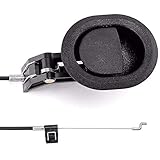
ttmagic Sofa Chair Recliner Release Pull Handle 3" by 3.5" Replacement Parts with Cable, Fits Ashley Lazy Boy and Most Recliner Brands Couch Sofa Chair Furniture, Exposed Cable Length 4.9"
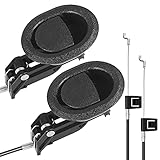
Recliner Replacement Parts with Pull Handle and Release Cable (2-Sets), Repair Recliner Mechanism Parts Compatible with Most Furniture of Recliner Sofa Couch Chair
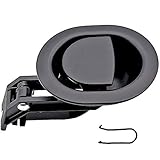
ttmagic Universal Heavy-Duty Metal Sofa Chair Recliner Release Pull Handle Replacement Parts, Fits Ashley, Lazy Boy and Most Recliner Brands, 3.5"L x 3"W x 1.2"H Handle Size
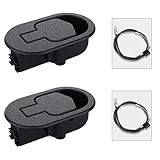
Baridwon 2 Set Recliner Replacement Parts, Durable Recliner Release Pull Handle with Recliner Pull Cable, Repair Replacement Parts Compatible with Most Furniture of Recliner Chair Sofa Couch