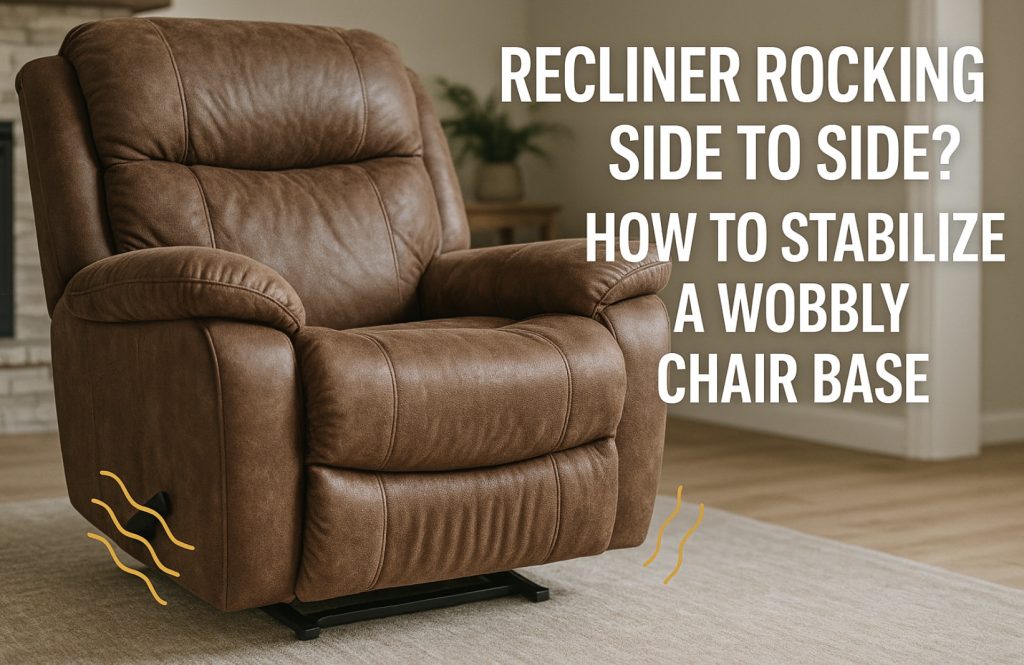
A gentle rock is nice. A recliner that wobbles, tilts, or feels like it might dump you on the floor? Not so much. Side-to-side rocking or a loose, unstable base usually comes down to a short list of issues: uneven floors, loose mounting hardware, worn swivel/rocker parts, or a cracked base frame. This guide walks you through practical checks to figure out whether the wobble is in the floor, the base, or the frame—and what you can do to stabilize it safely.
- Common Wobble Symptoms
- Safety & Setup
- Understand Your Recliner Base Type
- Check 1 – Is It the Floor or the Chair?
- Check 2 – Tighten Base Bolts & Mounting Points
- Check 3 – Inspect Swivel, Rocker & Glide Hardware
- Check 4 – Fix Wobbly Legs, Feet & Rails
- Check 5 – When the Base or Frame Is Cracked
- Quick Shopping Links
- Quick Parts & Tools
- When to Repair vs Replace
- FAQ
Common Wobble Symptoms
- Side-to-side rock when you sit down: Chair tilts left or right a few inches, even when not reclined.
- Base moves independently: You feel the top move slightly on the base before the mechanism engages.
- Noticeable lean: The recliner looks or feels like it leans to one side when viewed from the front.
- Clunk plus wobble: A dull clunk around the base when you shift weight can indicate loose hardware or cracked parts.
Safety & Setup
- Unplug power recliners: Disconnect power (and any battery pack) before tipping or working under the chair.
- Use a helper: Recliners are heavy; have someone steady the chair while you tilt or slide it.
- Work on a clear area: Move the recliner away from walls so you can access all sides of the base.
- Protect your hands and eyes: Wear mechanic gloves and safety glasses when working around metal frames and staples.
If you’re specifically fighting a swivel that won’t stay put, our guide on how to stop a swivel recliner from swiveling walks through base locks and simple stabilizing tricks.
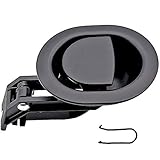
Baridwon 2 Set Recliner Replacement Parts, Durable Recliner Release Pull Handle with Recliner Pull Cable, Repair Replacement Parts Compatible with Most Furniture of Recliner Chair Sofa Couch

ttmagic Metal Recliner Handle Replacement Parts with Cable, Universal Recliner Sofa Chair Couch Release Lever Pull Handle, Fits Ashley and Major Recliner Brands, Exposed Cable Length 4.9“
Baridwon Recliner Replacement Parts with Pull Handle and Release Cable (2-Sets), Repair Recliner Mechanism Parts Compatible with Most Furniture of Recliner Sofa Couch Chair
Understand Your Recliner Base Type
- Stationary base: Four fixed feet or rails that don’t rock or swivel. Wobble usually means uneven feet or frame issues.
- Rocker base: Curved runners attached to a fixed frame. Designed to rock front/back, not side-to-side.
- Glider base: Recliner sits on a gliding subframe that moves on tracks. Side wobble can indicate worn track bushings.
- Swivel base: Round or star-shaped base with a central swivel. Wobble can come from a loose or worn swivel plate.
Knowing your base type helps you decide which fasteners and components to focus on as you troubleshoot.
Check 1 – Is It the Floor or the Chair?
Goal: Rule out a warped floor or thick carpet as the main cause.
- Move the recliner to a different spot: Try the chair on another area of the room or a different room altogether.
- Test on a hard surface: If possible, move it temporarily onto a firm surface like tile or hardwood.
- Use a straightedge or level: A basic torpedo level or straight board can reveal obvious dips in the floor.
- Shim the short point: On stationary bases, a simple furniture pad or felt pad under the short foot can sometimes remove minor wobble.
If the wobble changes or disappears on a different surface, you may be dealing with a floor issue more than a chair problem. If it behaves the same everywhere, it’s time to focus on the base.
Check 2 – Tighten Base Bolts & Mounting Points
Goal: Make sure the recliner frame is securely attached to the base.
- Flip the recliner: Lay it on its side or back (unplugged) on a blanket so you can see the underside of the base.
- Locate the base mount points: For swivel bases, look for the central swivel plate and its mounting bolts. For rockers/gliders, locate where the upper frame bolts to the lower base assembly.
- Check for movement: Grip the upper frame with one hand and the base with the other; gently rock to feel for play between them.
- Tighten hardware: Use a ratcheting socket set and appropriate wrenches to snug all accessible base bolts. Add lock washers where bolts tend to loosen.
- Re-test wobble: Set the chair upright and test again; if the side rock is reduced or gone, loose mounting hardware was the culprit.
If bolts won’t tighten (spinning in stripped holes or broken welds), that’s a sign of deeper base or frame damage—see Check 5.
Check 3 – Inspect Swivel, Rocker & Glide Hardware
Goal: Find worn or bent moving parts in the base assembly.
- Swivel base: Inspect the swivel plate between the chair frame and round/star base. Look for bent arms, missing rivets, or a warped plate. Excess play here will feel like the whole chair is wandering.
- Rocker base: Examine the curved rocking runners and their side brackets. Loose pivot bolts or worn bushings can allow side tilt.
- Glider base: Check the glide tracks and bushings where the top frame rides on the lower base. Worn plastic inserts can create slop and noise.
- Look for metal-on-metal wear: Shiny bare metal spots indicate rubbing or slop that can turn into wobble and noise.
- Lubricate lightly where appropriate: On squeaky but intact parts, a little silicone spray lubricant can help—avoid over-lubing areas meant to stay tight.
If you find cracked or badly worn base components, you may be able to replace the entire base or swivel assembly with a compatible part. Search for a matching recliner swivel/rocker base replacement and compare dimensions carefully.
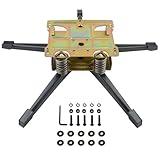
JNSOET 25 in Recliner Base, Swivel Rocker Plate, 5-Leg, Yellow/Black

#302SR - 25" - 5 1/4" High - 360° - Recliner Base W/Pitched Rocker Swivel Plate - 5 Legs w/Cap - Heavy Duty - 51 Ball Bearings - Factory Warranty Sticker/Card - No Hardware - Made USA - Rated No. 1

ChiCoko 25" Replacement Recliner Base, 360° Swivel Rocker Box Plate for Rocker Recliner,5-Leg Rocking Sofa Accessories
Check 4 – Fix Wobbly Legs, Feet & Rails
Goal: Stabilize non-swivel stationary bases and legged recliners.
- Inspect each foot or leg: Look for loose screws, missing glides, or legs that have pulled away from the frame rail.
- Tighten and re-seat: Snug any loose screws or bolts. If a screw no longer bites, consider plugging the hole with a wood dowel and glue, then re-drilling.
- Check frame rails: On some recliners the legs attach to long wooden rails. Cracked or bowed rails can cause a rocking effect.
- Add stabilizing glides: Use adjustable furniture glides or pads to bring all feet into solid contact with the floor.
- Test again on a flat surface: After tightening and leveling, re-test wobble on the flattest floor section you have.
If the base rails themselves are cracked or badly warped, they may need reinforcement or replacement to truly stabilize the chair.
Check 5 – When the Base or Frame Is Cracked
Goal: Decide if the wobble is caused by structural damage (and if it’s still safe to use).
- Look for splits in base components: Cracks in wood rails, broken welds on metal bases, or fractured swivel plates are serious.
- Watch for movement at joints: Have someone sit and shift while you watch base corners and joints—if they move independently, that’s a red flag.
- Reinforce minor damage: Small splits in wood can sometimes be glued and bridged with steel mending plates and wood glue.
- Replace severely damaged bases: If the base is cracked through, the safest option is usually replacement rather than patching.
If you also notice the seat leaning or sagging to one side, you may have a combination of base and seat support problems. Our broader overview in Recliner Parts & Repairs can help you track down issues above the base as well.
- Recliner swivel/rocker base replacements – for worn or cracked base assemblies.
- Furniture leveling glides – stabilize uneven legs on stationary bases.
- Felt pads & sliders – reduce minor rock on hard floors and protect surfaces.
- Ratcheting socket sets – tighten base and frame bolts quickly.
- Steel mending plates – reinforce minor cracks in wood rails.
Quick Parts & Tools
- Rechargeable work light to clearly see the base hardware and joints.
- Ratcheting socket set, hex key set, and screwdriver set for tightening fasteners.
- Mechanic gloves and safety glasses for safe, comfortable inspection work.
If you dig into the base and discover that the wobble is part of a larger comfort or support problem (like sagging seat springs), you may find our other guides—especially Types of Recliner Mechanism and the step-by-step Recliner Tension Spring Replacement Guide—helpful for deciding how deep to go with repairs.
When to Repair vs Replace
- Good candidates for repair: Minor wobble from loose bolts, slightly uneven feet, or a worn but replaceable swivel base.
- Borderline cases: Multiple loose joints, noticeable seat lean, or older chairs with several worn components.
- Time to replace: Severely cracked bases, broken welds in critical locations, or frames that move in several places when you shift weight.
If you decide it’s time to upgrade, use what you’ve learned here plus the fit and durability tips in our Best Recliner for Big & Tall Buyer’s Guide to choose a recliner with the right base type, dimensions, and weight rating so it stays stable and comfortable for years.
FAQ: Wobbly Recliner Bases
Is it safe to keep using a recliner that rocks side to side?
If the wobble is minor and you can trace it to a small floor or foot issue, it may be okay short-term. But if the base or frame is cracked, or the wobble is getting worse, stop using the chair until you’ve inspected and fixed the cause.
Can I just put a rug under my recliner to stop wobbling?
Sometimes a rug can mask minor wobble from hard floors, but it doesn’t fix loose hardware or structural issues. Use a rug or pads as a final tweak after you’ve tightened and inspected the base.
Can I replace just the swivel base on a recliner?
Often yes—if you can find a compatible replacement with the same bolt pattern, height, and weight rating. Compare your existing base to a potential swivel/rocker base replacement carefully before ordering.
When should I call a pro?
If you see major frame cracks, broken welds, or you’re not comfortable working around heavy furniture and metal bases, a furniture repair tech or upholsterer is a smart next step.
Baridwon 2 Set Recliner Replacement Parts, Durable Recliner Release Pull Handle with Recliner Pull Cable, Repair Replacement Parts Compatible with Most Furniture of Recliner Chair Sofa Couch
ttmagic Metal Recliner Handle Replacement Parts with Cable, Universal Recliner Sofa Chair Couch Release Lever Pull Handle, Fits Ashley and Major Recliner Brands, Exposed Cable Length 4.9“
Baridwon Recliner Replacement Parts with Pull Handle and Release Cable (2-Sets), Repair Recliner Mechanism Parts Compatible with Most Furniture of Recliner Sofa Couch Chair
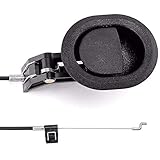
ttmagic Sofa Chair Recliner Release Pull Handle 3" by 3.5" Replacement Parts with Cable, Fits Ashley Lazy Boy and Most Recliner Brands Couch Sofa Chair Furniture, Exposed Cable Length 4.9"

Baridwon 2 Sets Recliner Replacement Parts - Metal Recliner Handle, Release Pull Cable Fits Ashley & Most Recliner Sofas, Exposed Cable Length 5.1 Inches