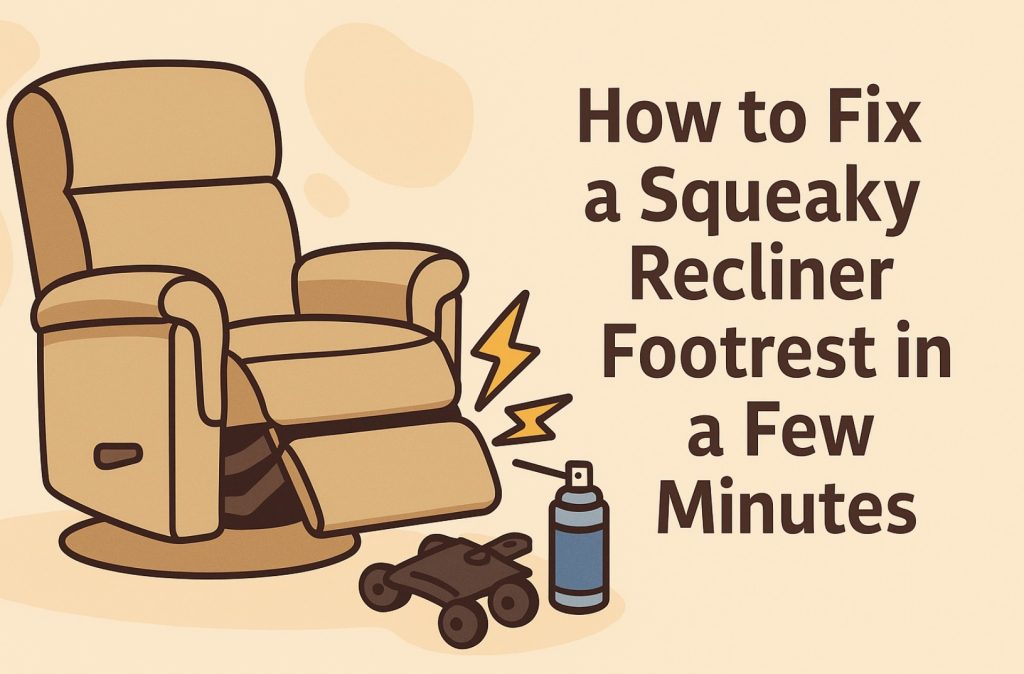
A squeaky footrest is one of those small things that can make your favorite recliner feel cheap and annoying. The good news: most squeaks come from dry pivots, loose hardware, or a rubbing spring you can fix in just a few minutes with basic tools.
This step-by-step guide shows you how to quickly track down the noise and quiet it, without tearing the whole chair apart. We’ll focus on easy access from underneath and around the footrest, and only talk about deeper repairs if the squeak is actually a warning sign.
- Common Footrest Squeak Symptoms
- Safety & Setup
- Find Where the Squeak Is Coming From
- Fix 1 – Lubricate Footrest Pivots & Joints
- Fix 2 – Tighten Loose Bolts, Screws & Brackets
- Fix 3 – Check Footrest Springs, Cables & Bars
- Fix 4 – Stop Fabric, Wood & Floor Noises
- Quick Shopping Links
- Quick Parts & Tools
- When a Squeak Is a Warning
- FAQ
Common Footrest Squeak Symptoms
- Squeak only when lifting the footrest: Usually a dry pivot or spring at the front of the mechanism.
- Squeak only when closing the footrest: Often a linkage bar or pivot pin rubbing under heavier load.
- Squeak on one side only: Likely a specific joint, spring hook, or loose bolt on that side.
- Footrest squeaks plus “ping” sounds: Could be a spring stretching or shifting, not just a dry joint.
Safety & Setup
- Unplug power recliners: Disconnect power and any battery pack before going underneath.
- Use a helper: Have someone steady the recliner while you tip it back or onto its side on a blanket.
- Watch pinch points: Keep fingers away from scissor arms, springs, and moving links when you test motion.
- Use good lighting: A bright rechargeable work light makes it much easier to see pivots, bolts, and springs.
If you want a quick visual overview of how different recliner mechanisms are put together before you start, our breakdown in Types of Recliner Mechanism is a handy reference while you’re underneath the chair.
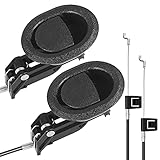
Baridwon Recliner Lever Parts, Handle with Exposed Cable 4.75in, 2 Sets | Recliner mechanism repair kit: release pull handle and cable for sofa, couch, chair; compatible with most furniture

ttmagic Metal Recliner Handle Replacement Parts with Cable, Universal Recliner Sofa Chair Couch Release Lever Pull Handle, Fits Ashley and Major Recliner Brands, Exposed Cable Length 4.9“
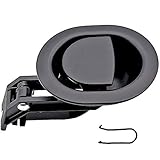
ttmagic Universal Heavy-Duty Metal Sofa Chair Recliner Release Pull Handle Replacement Parts, Fits Ashley, Lazy Boy and Most Recliner Brands, 3.5"L x 3"W x 1.2"H Handle Size
Find Where the Squeak Is Coming From
Goal: Pinpoint the area making noise so you don’t spray lube everywhere and hope.
- Recreate the squeak slowly: With the chair upright, raise and lower the footrest slowly while you listen. Try to tell if it’s left, right, center, or near the front.
- Have a helper move the footrest: Tip the chair onto its back (unplugged). While one person moves the footrest through its range, the other listens and watches from underneath.
- Look for shiny rub marks: Spots where paint is rubbed off on arms, bars, or pins are “hot zones” for squeaks.
- Check springs and moving links near the noise: Springs that twist, snap, or drag across metal can squeal and ping.
Once you’ve narrowed it down to a few joints or springs, you can treat that area directly instead of guessing.
Fix 1 – Lubricate Footrest Pivots & Joints
Goal: Quiet dry metal-on-metal contact at moving parts.
- Choose the right lubricant: For recliner mechanisms, a light silicone spray lubricant or dry-film spray is ideal. Avoid thick grease that attracts dust.
- Protect fabric and flooring: Lay a rag or cardboard under the working area. Spray into a small container and apply with a straw or cotton swab if space is tight.
- Target specific pivots: Lightly lube pivot pins, hinge points, and contact surfaces around the footrest arms—especially near where you saw shiny wear marks.
- Cycle the footrest: Raise and lower the footrest several times to work the lubricant into the joint.
- Wipe excess: Remove drips so they don’t collect lint or drip on carpet later.
If the squeak changes pitch or goes away after lubrication, you’ve likely found the culprit. If the noise remains exactly the same, move on to hardware and springs.
Fix 2 – Tighten Loose Bolts, Screws & Brackets
Goal: Stop joints from shifting and squeaking under load.
- Inspect all hardware around the footrest: With the chair tilted, look for bolts and screws connecting the footrest arms to the main mechanism and frame.
- Compare both sides: If the squeak is on one side, compare bolt positions and tightness to the quiet side.
- Use the right tools: A compact ratcheting socket set and ratcheting screwdriver are perfect for tight spaces.
- Tighten gradually: Snug loose hardware, but don’t crush wood or strip threads. If a screw spins freely, the hole may need repair or a slightly larger screw.
- Add lock washers: On repeat offenders, add lock washers to keep bolts from backing out again.
If tightening a specific joint makes the squeak disappear or much quieter, you’ve likely found the source.
Fix 3 – Check Footrest Springs, Cables & Bars
Goal: Make sure assist springs and release hardware aren’t rubbing, twisting, or over-stressed.
- Inspect footrest assist springs: Many recliners use coil springs to help open/close the footrest. If a hook is twisted or a spring rubs across a sharp edge, it can squeak or ping.
- Check the release bar and cable: If your chair uses a cable and release bar under the footrest, make sure the bar isn’t scraping bare metal and the cable isn’t dragging across edges.
- Look for misaligned hooks: A spring hooked into the wrong hole or angle can groan as it stretches.
- Lubricate contact points lightly: A small dab of silicone or dry lube where spring hooks contact metal can quiet squeaks—avoid soaking the spring itself.
- Replace damaged springs: If you see cracked coils, stretched springs, or broken clips, replace them with a matching recliner tension spring kit.
If you discover a clearly damaged spring or clip, our detailed Recliner Tension Spring Replacement Guide walks through measuring, choosing, and installing new springs step by step.

7" Recliner Tension Spring Replacement Kit with spring puller, 2 Pack | Long Neck Hook Steel Spring

DONFON 3-1/4 Inch Extension Springs for Recliner Sofa Chair - 2 Pack
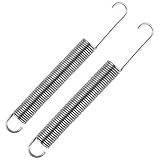
Zookpr 2Pcs 7 Inch Recliner Springs Replacement Sofa Chair Mechanism Spring
Fix 4 – Stop Fabric, Wood & Floor Noises
Goal: Eliminate non-mechanism squeaks that just sound like metal.
- Check fabric and padding: Sometimes the front edge of the footrest rubs the upholstery or leather as it moves. Gently pull the fabric taut or adjust staples if there’s a tight pinch point.
- Look for wood-on-wood: On some designs, a wooden footrest board can rub the frame when extended. A thin felt pad or felt furniture pad at the contact point can silence the squeak.
- Isolate the base from the floor: If the squeak happens when the chair rocks slightly as you extend the footrest, the base may be rubbing the floor. Try furniture sliders or felt pads on the feet.
- Test on a different surface: Move the recliner onto a rug or hard floor temporarily to see if the noise follows the chair or stays with the flooring.
If the squeak disappears when you isolate the base or pad one small contact point, you’ve got a simple friction issue rather than a failing mechanism.
- Silicone spray lubricant – ideal for quieting metal pivots without leaving greasy buildup.
- Dry Teflon/graphite sprays – great for tight joints where dust could be an issue.
- Recliner tension/assist springs – replace noisy or stressed springs that creak and ping.
- Ratcheting socket sets – tighten loose bolts causing squeaks and shifting.
- Felt pads & furniture sliders – eliminate floor and wood contact noises.
Quick Parts & Tools
- Rechargeable work light, safety glasses, and mechanic gloves for safe under-chair work.
- Ratcheting socket set and screwdriver set to snug up mechanism and frame hardware.
- Needle-nose pliers for adjusting springs and small parts near the footrest.
If you discover that your squeak is actually part of a deeper spring or mechanism issue, our more in-depth guides like Recliner Tension Spring Replacement Guide and Types of Recliner Mechanism can help you decide whether to repair further or start thinking about a replacement.
When a Squeak Is a Warning
- Watch for new movement: If the squeak comes with a wobble, lean, or sudden shift in how the footrest feels, look for cracks or loose joints.
- Check for visible damage: Broken springs, bent arms, or cracked welds are not just noise issues—they’re safety issues.
- Stop using the chair if: You hear a loud crack followed by a big change in how the footrest supports you.
If you’ve quieted the squeak but the recliner still feels undersized or strained for your body, it may simply be the wrong fit. Tools like the Recliner Size Calculator can help you pick a better-fitting, quieter replacement when it’s time.
FAQ: Squeaky Recliner Footrests
Is it safe to spray WD-40 on my recliner?
Light household oils can work short-term, but they tend to attract dust and lint. A dry or silicone-based lubricant designed for mechanisms is usually a better long-term choice.
How long should a lubricant fix last?
If the squeak is purely from dry pivots, a good application of silicone or dry spray can last months or longer. If the noise returns quickly, look for loose hardware or worn parts instead of just re-spraying.
Can a squeaky footrest mean a broken spring?
Yes. A spring that is starting to crack or stretch can squeak or ping right before it fails. If you see damaged coils or hooks, treat it as a spring repair, not just a noise issue.
When should I call a pro instead of DIY?
If you find major frame damage, multiple broken springs, or you’re not comfortable working around heavy mechanisms and springs, a furniture repair tech or upholsterer is a smart next step.
Baridwon Recliner Lever Parts, Handle with Exposed Cable 4.75in, 2 Sets | Recliner mechanism repair kit: release pull handle and cable for sofa, couch, chair; compatible with most furniture
ttmagic Metal Recliner Handle Replacement Parts with Cable, Universal Recliner Sofa Chair Couch Release Lever Pull Handle, Fits Ashley and Major Recliner Brands, Exposed Cable Length 4.9“
ttmagic Universal Heavy-Duty Metal Sofa Chair Recliner Release Pull Handle Replacement Parts, Fits Ashley, Lazy Boy and Most Recliner Brands, 3.5"L x 3"W x 1.2"H Handle Size
Baridwon 2 Set Recliner Replacement Parts, Durable Recliner Release Pull Handle with Recliner Pull Cable, Repair Replacement Parts Compatible with Most Furniture of Recliner Chair Sofa Couch
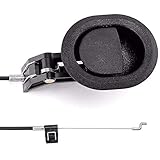
ttmagic Sofa Chair Recliner Release Pull Handle 3" by 3.5" Replacement Parts with Cable, Fits Ashley Lazy Boy and Most Recliner Brands Couch Sofa Chair Furniture, Exposed Cable Length 4.9"